Saturday, July 27, 2024

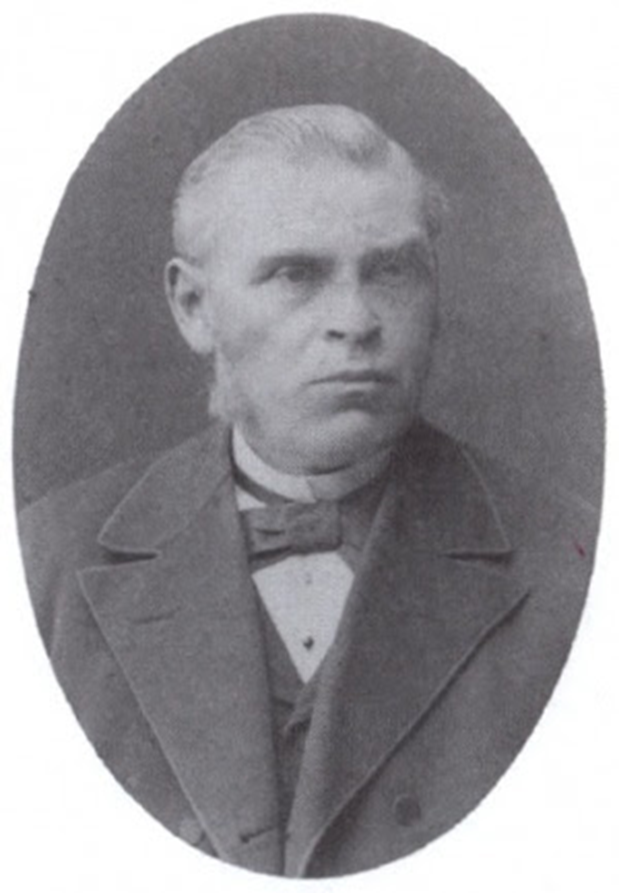
Gottfried F. Alf

Gottfried F. Alf

Do you really believe that the Gospel is “the power of God unto salvation, to everyone who believes…” (Romans 1:16)?  God works in each individual heart in individual, often unexpected ways.  In 1850, the town of Mentnowo, a German colony near Warsaw, Poland, had no minister.  Lutheran ministers were few and covered very large areas.  The once red-hot Lutheran faith had become a flicker of its former self and spiritual lethargy was the norm among both clergy and lay people.

In cases like that at Mentnowo, where there was no local minister, it was expected that a schoolteacher (who presumedly knew how to read) would lead Sunday worship and read a sermon.  In Mentnowo, this task fell to nineteen-year-old Gottfried Alf.

Taking his task seriously, Gottfried began to study the Bible to better understand the sermons he was reading.  Reading intently for over two years, he realized his own lost condition and understood that salvation came only by the work of Christ.  In 1853, he committed his life to Christ.

Gottfried shared what he had learned with his students.  Many of them came to faith, as well as many parents.  Other parents resisted and complained to the over-extended pastor of the region.  This pastor told him to hold no more Bible teaching and no more prayer meetings.  When he refused to quit, they orchestrated his firing from his job and kicked him, his wife, and their young child from their home.  Now without income, his father took the family in and allowed Gottfried to farm some of his land to provide for his family.

Convicted of the truth of the Gospel and with an insatiable desire to share, Gottfried began making trips around the region to preach.  People were saved.  Lives were changed.  The status quo was disrupted.  As a result of this, Alf was arrested and beaten by the Lutheran authorities.  Realizing he no longer had a place in the church into which he was born, Gottfried became a Baptist – incurring the wrath of both the Lutherans, the local Russian Orthodox clergy, and his own father who threw him off his land.  By 1866, the year overt persecution ceased, hostile authorities in the regions he visited had beaten and/or imprisoned him at least thirty times.  In some cases, food was withheld, chains were put on deliberately tight, medical care was neglected.  Other times he was exposed in chains to crowds who would heckle, jeer, and threaten.  Despite these difficulties, Gottfried continued to preach and work.  He founded many churches in Poland and in Ukraine.

A biographer records just one of his imprisonments with these words:

“Not far from Adamowo, although he was carrying a pass, Alf was stopped by two of his enemies. They found, however, that Adamowo was not listed in his pass and took him to the magistrate in Wiszkow…. Since he carried tracts in his travel bag, he was labeled a sectarian and was thrown in prison on May 13 for four days. For the first three days he was among criminals and without food or drink; on the fourth day a German smith heard of him and brought him food. He was then transported to Pultusk, where he was imprisoned eight days. He was held here so long that his pass expired, which was further cause for punishment. He was then ordered to Przasnysz, a particularly torturous journey by foot since he was not feeling well. Fortunately, brethren with a wagon came searching for him and carried him to Prasnisz, where he remained imprisoned for four days until May 28.
The authorities then sent him to Chazecharow, where on the next day the magistrate ordered him to pay ten rubles. Alf sent in the ten rubles, but that did not settle the matter.… Alf was ordered to deliver the money personally with a written declaration that he had not traveled with any evil intent and would not spread a false faith but only the pure Christian religion…. [By] June 3, Alf had endured twenty-one days of suffering and approximately 1,300 kilometers [808 miles] of tiresome travel. After four weeks he arrived home…. His wife and most of the brethren had given him up as lost and dead.”

Gottfried Alf’s persistence and suffering paid off.  By his death in 1898, many thousands of people had come to faith.  Many of his converts later emigrated to the United States, establishing churches there.


Christian History e-mail: 28 Nov 2021

https://www.captivefaith.org/post-reformation/alf/


Saturday, July 13, 2024

Wang Ming-Dao

Wang Ming-Dao

In 1920, a young Chinese man named Wang Ming-Dao, who had been a Christian since childhood, resolved to take his faith seriously.  Writing out a list of his sins, he prayed and vowed to leave them behind.  Praying until he received assurance of forgiveness, he arose a changed man and zealously studied the Scriptures.

A teacher at a Presbyterian boarding school in Beijing, he came to believe the Biblical method of Baptism to be immersion.  Stubbornly holding to this conviction, and teaching it, led to the loss of his job.  Though the loss of his job discouraged him, he remained faithful and began preaching on his own and with a number of evangelistic campaigns in 1923.  He pastored a church called the Christian Tabernacle and also began publishing a quarterly Christian magazine which was widely read.

Beijing fell to Japanese forces in 1937.  By 1939, the Japanese occupiers insisted that all publications print patriotic slogans supporting the Japanese military.  Wang faced a dilemma: become a political publication or shut down.  He chose a third option: publish anyway without the propaganda.  He faced immense pressure from the Japanese and from other Christians and Christian groups which had capitulated to their captor’s demands.  Wang refused to join, and preached on the suffering, faithfulness, and protection that Daniel and his friends faced in Babylon.

The fall of Japan in 1945 led to the rise of Mao-Tse Tung and Communist rule in 1949.  The Communists established an organization which came to be known as the Three-Self Patriotic Movement (TSPM) – an organization and a set of guidelines for Christian churches which included severing all ties with Western churches and organizations, agreeing to a rewritten Bible, denial of core beliefs including the Incarnation, the virgin birth, the resurrection, the Trinity, and other abuses of power.  Wang Ming-Dao realized this was intended to bring the church under state control and, despite intense pressure, he felt it was his duty to resist and continue to teach uncompromising Biblical truth.

Wang published a number of books between 1951 and 1954, proclaiming the Gospel and defending Biblical truth.  The TSPM ramped up its pressure and in 1954 convened a meeting to accuse him of crimes but, like Daniel in the Bible, they could find no fault with him.  Into early 1955, attendance at the Christian Tabernacle reached record numbers.

On August 7th, 1955, police arrived at his home around midnight and arrested him, imprisoning him without a conviction.  At the time, he did not realize that his wife had been imprisoned as well.  To the Communists, his defiance was counter-revolutionary and a severe crime.  He was subjected to daily interrogations and torture and then subjected to further torture by especially-placed cell-mates.

After over a year of this pressure, Wang was informed of a number of the detainment of Christians he was close to.  Worse yet, he was told of his wife’s imprisonment and deteriorating health.  Under such intense personal pressure, Wang broke and signed a document stating he was a counter-revolutionary and confessing to his ‘crimes.’

While TSPM leadership was elated, Wang was crushed at his actions.  Plagued with guilt and remorse over his confession he, with his wife’s support, reneged on his promise to join TSPM and they were both re-arrested seven months after their release.

Wang served an additional 22 years in prison, subject to the same daily torturous interrogations faced before.  However, the Lord stood by him and he remained faithful.  He clung to a verse from Micah, “When I fall I shall arise, when I sit in darkness the Lord will be a light unto me. I will bear the indignation of the Lord because I have sinned against Him until He pleads my cause and executes judgment for me.” (Micah 7:7).

In 1979 China – suffering from famine, a result of Mao’s disastrous policies, let many prisoners go, including Wang Ming-Dao – malnourished and nearly blind from his ordeal.  He settled in Shanghai and preached again, as God gave him opportunity.  In his final years he became one of the leaders of the house-church movement which had sustained the Gospel through the dark years of Communist oppression.

Wang Ming-Dao died at home in 1991.  He shows us that Christians, even when they fail, can have a radiant witness in their faith and do great things for the Kingdom of God.

https://www.thegospelcoalition.org/article/wang-ming-dao-faithful-political-coercion/

https://www.evangelical-times.org/the-fall-and-rise-of-wang-ming-dao/


Saturday, June 22, 2024

Emma Whittemore

Used to the glitz and glamour of the social scene in late 19th century New York City, Emma Whittemore had it all.  With her husband Sidney, she enjoyed all that wealth had to offer.

One day, a friend persuaded her to attend a meeting to hear an evangelist at the local YMCA.  Unbeknownst to her, a separate friend had persuaded her husband to attend the same meeting.  Both were deeply convicted by the message, and both went forward to, in her words, make “firm resolutions to live a different life.”  They then returned home to pray and determine what that commitment meant.

Emma’s friend called on her again to see if she would be willing to accompany her to hear a man named Jerry McAuley.  Jerry, an ex-con and reformed alcoholic, had opened the nation’s first mission to the homeless, Water Street Mission.  They first resisted, but then agreed to go, “just this once.”  Emma spoke often of that first evening at the mission.  They heard cursing, saw fighting in the open, and saw clawing women dragged away to the police station.  The sights, sounds, and smells were something her refined self had never experienced. 

Walking into the meeting, Emma and Sidney whispered condescending words to each other about the people they were gathered with.  Their haughty attitude changed, however, when Jerry finished preaching and opened the floor for testimonies.  One after another, slum tenants stood up and praised God for deliverance from addiction, strength amidst temptation, and daily deliverance from sin. 

Astonished, both Emma and Sidney’s hearts sank in shame at the thought of their own pride.  They noticed a genuineness among the people – truly transformed lives – and not the veneer they knew they possessed.  Emma later wrote of her life prior to this meeting as a “useless life.”  Sidney stood weeping, covering his face with his hands in shame, and asked for prayer.  Jerry called him up to the front, and Emma followed.  Spontaneously, a group surrounded them, as Emma later wrote, “a drunkard, a thief, and a tramp on my husband’s side, and on my side one or two poor women…” and the drunkard led them in prayer for the couple.

Emma wrote of that night, “From that night I date the giving up of a worldly life.”  Their “just this once” trip to the mission turned into the first of many visits.  Jerry’s wife Maria mentored Emma, showing her how to minister to poor women and how to give her testimony.  Emma’s heart broke for the horrors she saw among the street women but she continually prayed, asking God for strength to continue.  He provided it.

Emma opened her first home for fallen girls on October 25th, 1890.  She gave it the name “Door of Hope.”  Emma felt God was leading her to trust in Him alone for provision, so she never held a fund-raiser and never voiced a need.  Day by day, sometimes hour by hour, God provided.  Funds came in, just in time, time after time to meet the needs of Door of Hope.

Within four years, Door of Hope had helped 325 girls.  Emma’s primary concern was always that they would know the power of Christ in their lives.  As she put it, she could take them out of the dens of vice, “but only Jesus can get the vice out of the girls.”  Her second goal was to turn these women into evangelists, active in their efforts to share with others.

Door of Hope went international.  When Emma died in 1931, there were at least 97 homes around the world, in the US, Canada, Great Britain, Germany, Africa, Japan, and China.  The great evangelist Wilbur Chapman said of her, “She has probably been instrumental in saving more fallen women than any other one person.”

https://www.christianity.com/church/church-history/timeline/1801-1900/emma-whittemore-and-door-of-hope-11630627.html


Saturday, June 8, 2024

Gladys Aylward

Gladys Aylward

Born north of London in 1902, Gladys Aylward left school at the age of fourteen, working as a parlor maid in the homes of London’s wealthy class.  Raised in a Christian home, she nevertheless allowed herself to be taken in by the seduction of wealth via her work.

In her mid-twenties, she went to a revival meeting and recommitted her life to Christ.  She became very active in sharing her faith.  Learning about missions work in China, she felt very convicted to go.  Gladys was accepted to training with China Inland Mission in 1929, despite her lack of education.  She excelled in the practical work, but failed the classroom work – having a very tough time with the Chinese language.  Her classroom failures resulted in her being dropped from consideration for the organization.

Undeterred, she went back to work as a maid, planning to get all the expenses to pay for herself to go to China within three years and secured the patronage of a lady missionary already on the field.  Her frugality and prayers resulted in earning all she needed in less than a year.  Traveling by train through Siberian Russia into China, at a time of war between the two countries, the trip itself was fraught with adventure and danger, including being detained by Russian authorities and having to covertly enlist the aid of the British Consulate to smuggle her into China.

Her initial job was taking care of mules.  Her mentor had set up an inn and a mule stop for travelers.  The provided a place to sleep, food to eat, and care for the animals.  In this context, Gladys became very fluent in Chinese and used the opportunity to witness to many travelers, and won many to Faith.

After her mentor passed away, Gladys was offered a job by the Chinese government as a foot inspector.  The government of China had recently outlawed the practice of “foot-binding” – tightly binding the feet of young girls to change the size and shape of their feet as they grew.  Gladys had the authority of the government to go into homes and check on the feet of these girls.  This opened many doors to many families who otherwise would have never in their lives met a Christian, let alone an evangelist.  The Gospel was shared hundreds of times in this context, and many more were won to faith.

In her time there, at one point the local leader instructed her to intervene in a prison riot.  At 4’ 10” tall she was hardly an imposing figure, but the leader had heard her speak that a Christian had nothing to fear and directed her to walk into the prison and stop the riot.  Stepping in the midst of the angry mob she shouted, “I cannot hear when everyone is shouting at once!  Choose someone to be your spokesman and send him to me!”  The designated person told her of overcrowding, lack of food, and a hopelessness among the inmates.  Gladys promised to advocate for reforms and oversaw changes that brought in regular food.  She arranged for looms and a grindstone for grain so that the prisoners could be productive and useful in their incarceration.

In 1936, she saw a woman and a young girl begging by the road.  The young girl had sores and was obviously malnourished.  Speaking to them, she became certain that the child did not belong to the woman but was there as a ‘prop’ to aid in begging.  Gladys purchased the child for a small amount of money – this child becoming the first of over 100 children rescued by Gladys in the next two years.

In the Spring of 1938, Japanese bombs began to fall on the city.  She initially tried to stay but as the fighting got closer to the city, Gladys knew she had to leave with her children.  The Japanese had blocked the main roads leading into and out of the city, so she had to take her over 100 children over treacherous mountain paths.  Their food ran out, but that 12-day journey was rife with God’s blessings.  One night, a Buddhist priest hid them in his temple while they slept.  Another night, a group of Chinese soldiers came across them – providing them with food and guarding them while they slept the night.

Gladys had hoped to find boats waiting to help them cross the Yellow River, but when they arrived all the boats were gone.  Broken, Gladys broke down and wept until some of the children approached her and asked why they couldn’t ask God to part the sea for them as He did for the Israelites.  Admonished, Gladys called the children to her and they prayed and sang hymns.  Hearing the music, a Chinese officer found his way to them and was able to arrange for some military boats to transport them across the river to safety.  When the children had reached the safe haven, Gladys collapsed.  Taken into medical care, it was discovered she had Typhus. 

Gladys Aylward took many months to recover.  Greatly weakened, she was flown back to London where she took many opportunities to speak about the need for the Gospel in China.  After the war, she returned to China.

When the Communists took over and expelled Christian missionaries, Gladys moved to Taiwan and established in orphanage, taking in abandoned children.  She died in 1970 and is buried in Taipei.

The story of Gladys Aylward is captivating, and it was while she was still alive.  In 1957, a biography about her was published, entitled The Small Woman.  The book became the impetus for a 1958 movie called The Inn of the Sixth Happiness starring Ingrid Bergman in Gladys’ role.  When Newsweek magazine reviewed the movie and summarized the plot a reader wrote in, believing the story to be fiction, to say, “In order for a movie to be good, the story should be believable!”

Gladys Aylward appeared to be an unlikely candidate for mission work, but God chose her and gave her great determination to do the work.


https://www.ligonier.org/learn/articles/missionary-gladys-aylward

http://justus.anglican.org/resources/bio/73.html

https://en.wikipedia.org/wiki/Gladys_Aylward


Saturday, May 18, 2024

Monica

Saint Monica

Monica was a woman born in northern Africa around 332 AD, still in the days of the Roman Empire.  A Christian woman, she was married at a young age to a non-believing Roman official named Patricius.

Monica determined to set a Christian example for her husband.  Despite his raging temper and propensity to cheat, she prayed for him and for her three children: two sons and a daughter.  Patricius mocked her piety, but allowed her some freedom to attend church and give alms.  Over time, he grew to admire her virtues and became deeply affected by her genuine love for him.  When he grew ill at a relatively early age, Patricius came to faith just prior to his death in the year 370.  Patricius’ mother and two of Monica’s children came to faith shortly after.

Praying fervently for her remaining son, Augustine, Monica was known to weep over his soul.  She later recounted the counsel of one church leader who told her, “the child of those tears shall never perish.”  Augustine chased the trappings of the world and traveled to Carthage to study Rhetoric – the art of public speaking and persuasion.  Enmeshed in Greek Philosophy and captivated by the ‘rock star’ status of a successful Rhetorician, Augustine met a woman with whom he lived and even had a child by that woman, despite Monica’s warnings against fornication.

Taking a teaching post in Rome Augustine moved there, and eventually moved from there to Milan.  He couldn’t outrun Monica though, either her prayers or her physical presence.  In Milan, Monica met the great church father Bishop Ambrose who joined Monica in praying for her son.  Monica’s persistence wore her son down, and he agreed to go with her to church to hear Ambrose – hoping that the famed Bishop could teach him a trick or two of oratory.

Augustine was unimpressed with Ambrose’s skills in rhetoric, but in talking to him was stricken by the deep convictions of Ambrose.  Around the year 387, at the age of 33, Augustine came to faith and was personally baptized by Ambrose.

The two made the decision to travel back to Carthage.  En route, Monica fell ill passed away outside of Rome.  Augustine’s grief over the loss of his mother prompted him to write his autobiography ‘Confessions.’  In that book, he records some of Monica’s last words to him: “Son, for my own part I have no further delight in any thing in this life.  What I do here any longer, and why I am here, I know not, now that my hopes in this world are accomplished.  There was one thing for which I desired to linger for a while in this life, that I might see you as a Christian before I died.  My God has done this for me more abundantly, that I should now see you…become His servant.”

The Catholic Church holds Monica in high esteem, considering her the Patron Saint of homemakers, married women, mothers, abuse victims, alcoholics, and widows.  We hold her in high esteem as a diligent Christian woman, a warrior in prayer, and the mother of one of the great theologians of the early church.


https://en.wikipedia.org/wiki/Saint_Monica

https://mycatholic.life/saints/saints-of-the-liturgical-year/st-monica-mother-of-st-augustine-august-27/


Saturday, April 20, 2024

Calvary Covers It All


Walter Taylor – Calvary Covers It All

Born in 1865 in Pittsburgh, Walter Taylor was an ideal student.  He got great grades and had a great reputation.  However, there was a darker side to him: as a youth, Walter ran with a gang.  As a youth, he habitually broke into rail cars, stole from street vendors, and seemed to love to cause havoc.  He was very adept at avoiding getting caught.

As a young man, his overriding interest was making money.  Walter, nobody knowing about his darker side, got a teaching credential.  He moved from teaching to contractor work, to auditing, and back to teaching again – always chasing the jobs that paid more money.  Eventually, as a young man in his early 30s, he became an executive in a Chicago-based pharmaceutical company and later became one of three men who entered into an agreement to buy the business.

With his life looking up, tragedy struck Walter in 1896.  His young wife struck ill and died.  She was a godly woman, a partner who begged him to come to faith – something he snidely mocked her for.  She asked to have women over for prayer meeting – another thing he stubbornly refused.  At her funeral, when all others had gone, he was alone in his room.  Remembering all the vile things he said about her faith, all the complaints he gave her about her faith, he fell to his knees.  In his heart, he realized that she was in Heaven and that if it had been him in the coffin, that he would not have gone to Heaven.  On his knees in his own room, he came to faith.

Taylor wanted very much to serve his Lord.  He prayed that God would extract him from his pharmaceutical company contract.  Not long after, his two partners asked if they could buy him out of his part of the partnership – something he readily agreed to.  Feed from the financial burden, he threw himself into Christian work at the Y.M.C.A.  He then attended Moody Bible Institute while volunteering at Chicago’s Pacific Garden Mission to the homeless.  It was at the mission where he was set to sing a gospel song and he asked if there was a pianist who could accompany him.  A woman named Ethel, visiting for Christian work from Cleveland, stepped forward.  She played the piano and accompanied him vocally – and their voices meshed beautifully together.  In 1898, they were married.

Walter took his bride to a mission in Colorado, ministering to coal miners and rail workers.  After that, he accepted a position in Montreal.  While both ministries were fruitful, he later acknowledged that he was, in fact, running from God’s true calling of him to minister to the homeless.  He resisted because he remembered working in Chicago’s Mission, and specifically remembered catching lice from a man he had put his arm around.  He finally surrendered to God’s call when the Pacific Garden Mission called him back to lead the ministry.  Walter and Ethel, known affectionately as ‘Ma’ and ‘Pa’ Taylor, expanded God’s Kingdom among the most beat-up people in society.

It was during their tenure there that Ethel noticed a man in the service.  He was called “Happy Mac” – an alcoholic and a former dancer.  She and Walter had shared the Gospel with him many times and, despite his reluctance, he kept coming back.  This time, however, was very different.  She could see him intently listening to the words of the sermon – and could see that he was clearly troubled.  Catching up with him afterward, she asked him how he was doing.  “Mac” broke down, grieving his sin, saying “You don’t know how bad I am.  I can’t be saved, I’m just too bad.”

Ethel, remembering the words a guest speaker had used recently, told him, “Mac, Calvary covers it all!  All the sin of your past life, Calvary covers it all!”  “Mac” asked her to repeat it and she did.  God used those words to bring “Mac” – later to become the great evangelist Walter MacDonald – to faith.

Reflecting on “Mac’s” conversion, Ethel later went alone into the mission worship center, sat at the piano, and wrote the words to the great hymn, ‘Calvary Covers It All’:


Far dearer than all that the world can impart; Was the message that came into my heart;

How that Jesus alone for my sin did atone; And Calvary covers it all.


Calvary covers it all.  My past with its sin and stain;

My guilt and despair Jesus took on Him there,

And Calvary covers it all.


The stripes that He bore and the thorns that He wore; Told his mercy and love evermore;

How my heart bowed in shame as I called on His name, And Calvary covers it all.


How matchless the grace, when I looked on His face; Of this Jesus my crucified Lord;

My redemption complete I then found at His feet, And Calvary covers it all.


How blessed the thought, that my soul by Him bought, Shall be His in the glory on High;

Where with gladness and song I’ll be one of the throng, And Calvary covers it all.


Christian History e-mail: 09/03/2021

https://christianhistoryinstitute.org/it-happened-today/9/3

https://www.christianity.com/church/church-history/timeline/1801-1900/walter-grand-taylor-converted-in-his-room-11630646.html

https://www.baptistbiblebelievers.com/LinkClick.aspx?fileticket=JYYudWCKwuc%3D&tabid=367&mid=1190

https://www.rmjc.org/node/603

https://baptistbiblebelievers.com/LinkClick.aspx?fileticket=0zvVEqYzU4Q%3d&tabid=229&mid=745


Saturday, April 6, 2024

Cameron Townsend

Cameron Townsend

William Cameron Townsend was born into a Christian family in Southern California in 1896, the fifth of six children.  He enrolled in college after High School and, during his junior year, 1917, a missionary from an organization called the Student Volunteer Movement (SVM) spoke to the class, challenging them to give their lives to the ministry of evangelism.  Cameron spoke with the missionary and committed himself to the cause of SVM.

Cameron had previously enlisted in the California National Guard to serve his country in World War I.  He applied for, and surprisingly received, a discharge to instead go onto the mission field in Guatemala.  He committed to sell Spanish-language Bibles there for a year.  Nearing the end of his year-long commitment, Cameron was approached by a native Cakchiquel Indian asking him what he was selling.  He explained that it was the Bible, and it was God’s Word to him.  The man flipped through the book, then condescendingly asked, “If your God is so smart, then why doesn’t he speak my language?”  Learning more about these natives, Cameron was astonished to find that they were a group of about 200,000 people on the margins of Mexican society, many of whom spoke no Spanish at all.

The man’s remark impacted Cameron so much that he ended up remaining in Guatemala an additional 13 years, devoting that time to translating the Bible into the Cakchiquel language.  To do so, he had to invent an alphabet and a system for writing, and commit time to education of the people.  When his mission organization chided him for spending so much time in translation and less time in evangelism, he wrote back, “The greatest missionary in the Bible in the mother tongue.  It needs no furlough and is never considered a foreigner.”  He focused not just on the linguistic needs of the natives, but arranged with other mission groups for medical and vocational assistance as well.

Understanding that the Cakchiquel Indians were but one of thousands of unreached people groups, Cameron sought to expand his vision.  He returned to the United States in 1934 and founded an organization called the Summer Institute of Linguistics (SIL).  SIL’s focus was technically on preserving linguistics of indigenous cultures – preserving oral traditions and history in the native tongue – and in literacy education.  This secular emphasis opened doors for missionaries in many closed countries.  Partnering with SIL was Townsend’s other organization, Wycliffe Bible Translators, whose purpose is decidedly spiritual: Bible translation and missionary activities.  Providing logistical and technical support to both organizations was yet another organization, the Jungle Aviation and Radio Service (JAARS).

Today, the services of SIL International remain true to the intention of “Uncle Cam” in providing literacy services worldwide.  SIL is the most extensive linguistic operation in the world – currently involved in 1,341 communities in 98 countries and impacting nearly a billion people, per their website at the time of this writing.

Nearly a century after the finishing of that Cakchiquel Bible, Wycliffe Bible Translators have translated the full Bible in more than 550 languages, the New Testament in over 1,300 languages.  They estimate that about 1,800 languages still need a Bible translation to begin.

Cameron Townsend introduced the idea of “people groups” and “heart language” into the modern study of missions.  “Uncle Cam” once said, “The greater need is where the greatest darkness is.  Our orders are to forget self and to give our lives in service for the Master.”  His vision has guided nearly a hundred years of missionaries.  When he passed away in 1982, he was lauded as one of the three most impactful missionaries of the 20th century.


docs.wixstatic.com/ugd/33c277_a5294400facb93dcd183b3ed1d3e46fb.pdf

https://en.wikipedia.org/wiki/William_Cameron_Townsend

https://www.wycliffe.org/blog/featured/a-man-with-a-vision

https://encyclopediaofarkansas.net/entries/william-cameron-uncle-cam-townsend-4453/

https://www.thetravelingteam.org/articles/william-cameron-townsend

https://home.snu.edu/~hculbert/townsend.htm

https://www.sil.org/