Showing posts with label persecution. Show all posts

Saturday, October 3, 2026

Saint Apphianus


As a rich young man in the early fourth century, Apphianus could have had anything he wanted.  Sent by his parents from his home in Lycia (SW Turkey) to an exclusive school in Beirut, Apphianus came to faith through the influence of Christians he met.  As a new Christian, he rejected the excesses of vice his classmates chose to pursue and focused on living a godly life. 

Returning home, he found that his parents despised the Christian faith.  Still a teenager, he left his home and traveled to Palestine.  There, he was able to study under the famous church historian Eusebius – who later recorded the manner of Apphianus’ death.

Caesar Maximinus issued edicts commanding the administrators of cities to require everyone to offer a loyalty sacrifice to the emperor.  Name by name, individuals were called up to publicly offer this sacrifice.  The three ways to escape death were to publicly sacrifice to the idol, bribe an official, or run away.

Witnessing this horrified Apphianus.  On March 31st, 306 AD, he slipped through the band of soldiers that surrounded the officiating governor and grabbed his hand mid-sacrifice.  He begged the governor not to sacrifice to an idol, but to the one true God.

The governor was furious.  He ordered Apphianus to be beaten from head to toe and he was placed into the stocks.  The next day, his broken body was dragged out of the prison and he was commanded to sacrifice.  Apphianus’ refusal resulted in further severe beatings.  His continued refusal resulted in the Romans tying his feet with oil-soaked rags and lighting them on fire.  He was then dragged back into prison.

On the third day, still firm in his testimony, he was dragged to the dock and pitched into the sea.  Eusebius wrote:

“…as soon as they had cast this truly sacred and thrice-blessed youth into the fathomless depths of the sea, an uncommon commotion and disturbance agitated the sea and all the shore about it, so that the land and the entire city were shaken by it.  And at the same time with his wonderful and sudden perturbation, the sea threw out before the gates of the city the body of the divine martyr, as if unable to endure it.”

Apphianus shows us a bold and convincing testimony for Christ.


https://christianhistoryinstitute.org/dailystory/permalink/apphianus-was-tortured-for-trying-to-end-an-emperors-idol-worship


Sunday, January 18, 2026

Benjamin Keach

Benjamin Keach

On an October day in 1664, 24-year-old English pastor Benjamin Keach stood on trial.  The charge was “schismaticall factions and hereticall matter.”  The subject: infant baptism.  The text in question: a primer Reverend Keach wrote for children. 

As a Baptist, Reverend Keach believed and taught the practice was for those mature enough to profess faith in Christ, a conviction he came to after much study.  He was saved at age 15 and began his pastorate at age 18 – in the church that would in later times become known as the Metropolitan Tabernacle – pastored in the 19th century by Charles Spurgeon.

A prolific author, he received a lot of unwanted attention from the Church of England, resulting in the trial mentioned above.  His books were burned in front of him, he was sentenced to two weeks in jail, then two hours in the ‘pillory’ (i.e. – ‘stocks’) with the written charge to be displayed prominently, “For writing and publishing a schismatical book…” 

Normally in a pillory, the accused would be pelted with objects or stones and be subject to jeering from the crowd.  Keach’s response was to use the time there as a preaching opportunity.  With his wife by his side, he spoke clearly to the crowds, holding their attention.  An Episcopal minister was brought to shout him down but the crowd, knowing the preacher himself lived an ungodly life, was drowned out with laughter.

Through his life, Benjamin Keach found himself fighting the fight for Baptist doctrine in a then-unfriendly situation.  He was noted as a staunch defender who always brought the discussion back to Scripture.  He was fined and threatened numerous other times.  Spurgeon, later writing about him, said that to people like Benjamin Keach, “we as Baptists owe our very existence.” 

Reverend Keach as a reformer as well.  It was common practice then in English churches that, if singing was to be done at all, it was limited to the Psalms.  Studying Scripture, Keach became convicted that music should be a part of the church’s service.  Introducing music he wrote at the observance of the Lord’s Supper, he won both friends and detractors.

Benjamin Keach is an example of a godly man who based his doctrine on the Word of God, and ensured his own life and his congregation followed suit.


Christian History e-mail, 08 Oct 2022

https://digitalpuritan.net/benjamin-keach/


Tuesday, October 22, 2024

Fabian


Fabian was born in the early 200s to a noble family in Rome.  History does not record much more about his early life, but it is a fair assumption that he was well-educated and raised in the Faith.

Fabian came to Rome in the year 236 as an observer to the selection of a new Bishop.  It was a difficult election – Pope Pontian had reigned only five years before he was deported, following him Anterus held the position only a few months before he died.  Discussions over the next Bishop were somewhat heated with many prominent Christians in contention.

According to the Church Historian Eusebius, who lived less than a century after this, among the assembled crowd a dove flew down and landed on the head of Fabian.  Though he was not a leader in the church, the crowd noticed this and acclaimed Fabian as the next bishop.  According to Eusebius, “the whole body exclaimed, with all eagerness and with one voice, as if moved by the Spirit of God, that he was worthy; and without delay they took and placed him upon the episcopal throne.”

Despite the unusual manner of his election, Fabian proved a very capable bishop.  He organized the city of Rome into seven ecclesiastical districts to better provide for the spiritual needs of the residents.  Deacons were assigned to administer these regions.  He also organized charitable work within the city.  Fabian also had a great concern for the lost.  He sent a number of missionaries to Gaul (modern-day France) and established at least seven churches there.  A surviving letter he sent reflects this passion for the lost:

“We beseech you also to be zealous in praying in your pious supplications, that our God and Lord Jesus Christ, who will have all men to be saved and not one to perish, may, by His vast omnipotence, cause their hearts to turn again to sound doctrine and to the Catholic faith, in order that they may be recovered from the toils of the devil…”

Fabian also had a great interest in preserving the history of martyrs.  He advocated with Rome for the return of the bodies of two martyrs who had been sentenced to hard labor in Sardinia.  Fabian initiated repairs on the catacombs where many Christians had been buried and gathered eyewitness accounts and court records of martyrs over the (then) two centuries of the existence of the Church.

Finally, Fabian exhibited a passion for sound doctrine, roundly condemning a new heresy begun by an individual named Privatus in North Africa.

In the year 249, Decius ascended as Emperor of Rome.  Part of his agenda being a restoral of the Roman stage religion, this led to another round of persecutions for Christians.  Decius put out a decree that every person should offer a sacrifice to the Roman gods within a certain period of time.  This sacrifice would be witnessed by and recorded by the magistrates.  Bishop Fabian, being one of the few vocal opponents of this edict, was one of the first victims of Decius’ persecution.  He was thrown in prison.  Historical accounts vary as to whether he died in prison or if he was beheaded but it is know that he died on January 20th, 250 – fourteen years and ten days after his remarkable ascension.

Bishop Cyprian of Carthage, a contemporary of Fabian, and one who would himself die a martyr, wrote to the church of Rome about Fabian:

“I greatly congratulate you that you honor his memory with so public and illustrious a testimony…For just as the fall of a bishop tends to bring about the ruinous fall of his followers, so it is a useful and helpful thing when, by the firmness of his faith, a bishop becomes manifest to his brethren as an object of imitation.”


E-mail from Christian History Institute, 10 January 2022.

https://popehistory.com/popes/pope-st-fabian/

https://en.wikipedia.org/wiki/Pope_Fabian

https://en.wikipedia.org/wiki/Decius


Saturday, October 12, 2024

Agape, Chionia, and Irene

In the year 303, the Roman Emperor Diocletian, then in his 19th year of power, desiring to restore Rome to his vision of its prior glory, instituted what was the final major persecution of Christians in the Roman Empire, and arguably the most severe.  The emperor issued a number of edicts removing legal protections from Christians and mandating they comply with religious practices only to gods officially sanctioned by Rome.  Later edicts required universal sacrifice to Roman gods and were targeted at Christian clergy.  This persecution lasted ten years.

Born in the city of Aquileia, on the northern Adriatic coast of Italy, the orphaned sisters Agape, Chionia, and Irene were living devout lives under the supervision of a priest named Xeno.  As young women, they each declined numerous offers of marriage, preferring lives of service and prayer.

When the edicts from Rome were announced, they hid their Christian writings but were arrested for refusing to eat meat sacrificed to the Roman idols.  Diocletian had been passing through the area on his way to Macedonia and they were brought before him.  Seeing their beauty, he encouraged them to renounce their faith and find grooms from among the men in his entourage.  The sisters replied that they had no bridegroom but Christ and were ready to suffer for Him.  Enraged, and seeking to make an example of them, the emperor ordered they be brought with him and put on trial in front of the governor of Thessalonica.

Standing firm, though alone, the sisters refused to bow to the demands of the governor.  They were ordered to stand before yet another official, and they were subjected to yet another trial.  At this second trial, they were found guilty of not renouncing their faith.  The official sentenced the older two, Agape and Chionia, to be publicly burned at the stake.  According to tradition, in death the sisters appeared to be sleeping as the bodies themselves had not burned.

Irene, the youngest, was ordered to be taken to a brothel.  En route, the escort was met by two soldiers who instructed them that their orders had changed and instead they were to take her to a certain mountain and abandon her to her death there.  They did so and reported back, enraging the official who had given no such order.  He sent a contingent of soldiers to bring her back and, in the melee, she was shot with an arrow in the throat and died on the mountain, allowing her dignity to be preserved.

Their names in the Greek mean, respectively, ‘love’ (Agape), ‘snow’ (Chionia – indicating purity), and ‘peace’ (Irene).  Word of their martyrdom helped buttress the Church for the remaining nine years of persecution that was to follow.


https://en.wikipedia.org/wiki/Agape,_Chionia,_and_Irene

https://en.wikipedia.org/wiki/Diocletianic_Persecution

https://www.oca.org/saints/lives/2019/04/16/101106-virgin-martyrs-agape-irene-and-chionia-in-illyria

Saturday, July 13, 2024

Wang Ming-Dao

Wang Ming-Dao

In 1920, a young Chinese man named Wang Ming-Dao, who had been a Christian since childhood, resolved to take his faith seriously.  Writing out a list of his sins, he prayed and vowed to leave them behind.  Praying until he received assurance of forgiveness, he arose a changed man and zealously studied the Scriptures.

A teacher at a Presbyterian boarding school in Beijing, he came to believe the Biblical method of Baptism to be immersion.  Stubbornly holding to this conviction, and teaching it, led to the loss of his job.  Though the loss of his job discouraged him, he remained faithful and began preaching on his own and with a number of evangelistic campaigns in 1923.  He pastored a church called the Christian Tabernacle and also began publishing a quarterly Christian magazine which was widely read.

Beijing fell to Japanese forces in 1937.  By 1939, the Japanese occupiers insisted that all publications print patriotic slogans supporting the Japanese military.  Wang faced a dilemma: become a political publication or shut down.  He chose a third option: publish anyway without the propaganda.  He faced immense pressure from the Japanese and from other Christians and Christian groups which had capitulated to their captor’s demands.  Wang refused to join, and preached on the suffering, faithfulness, and protection that Daniel and his friends faced in Babylon.

The fall of Japan in 1945 led to the rise of Mao-Tse Tung and Communist rule in 1949.  The Communists established an organization which came to be known as the Three-Self Patriotic Movement (TSPM) – an organization and a set of guidelines for Christian churches which included severing all ties with Western churches and organizations, agreeing to a rewritten Bible, denial of core beliefs including the Incarnation, the virgin birth, the resurrection, the Trinity, and other abuses of power.  Wang Ming-Dao realized this was intended to bring the church under state control and, despite intense pressure, he felt it was his duty to resist and continue to teach uncompromising Biblical truth.

Wang published a number of books between 1951 and 1954, proclaiming the Gospel and defending Biblical truth.  The TSPM ramped up its pressure and in 1954 convened a meeting to accuse him of crimes but, like Daniel in the Bible, they could find no fault with him.  Into early 1955, attendance at the Christian Tabernacle reached record numbers.

On August 7th, 1955, police arrived at his home around midnight and arrested him, imprisoning him without a conviction.  At the time, he did not realize that his wife had been imprisoned as well.  To the Communists, his defiance was counter-revolutionary and a severe crime.  He was subjected to daily interrogations and torture and then subjected to further torture by especially-placed cell-mates.

After over a year of this pressure, Wang was informed of a number of the detainment of Christians he was close to.  Worse yet, he was told of his wife’s imprisonment and deteriorating health.  Under such intense personal pressure, Wang broke and signed a document stating he was a counter-revolutionary and confessing to his ‘crimes.’

While TSPM leadership was elated, Wang was crushed at his actions.  Plagued with guilt and remorse over his confession he, with his wife’s support, reneged on his promise to join TSPM and they were both re-arrested seven months after their release.

Wang served an additional 22 years in prison, subject to the same daily torturous interrogations faced before.  However, the Lord stood by him and he remained faithful.  He clung to a verse from Micah, “When I fall I shall arise, when I sit in darkness the Lord will be a light unto me. I will bear the indignation of the Lord because I have sinned against Him until He pleads my cause and executes judgment for me.” (Micah 7:7).

In 1979 China – suffering from famine, a result of Mao’s disastrous policies, let many prisoners go, including Wang Ming-Dao – malnourished and nearly blind from his ordeal.  He settled in Shanghai and preached again, as God gave him opportunity.  In his final years he became one of the leaders of the house-church movement which had sustained the Gospel through the dark years of Communist oppression.

Wang Ming-Dao died at home in 1991.  He shows us that Christians, even when they fail, can have a radiant witness in their faith and do great things for the Kingdom of God.

https://www.thegospelcoalition.org/article/wang-ming-dao-faithful-political-coercion/

https://www.evangelical-times.org/the-fall-and-rise-of-wang-ming-dao/


Saturday, March 9, 2024

Saint Lawrence

Saint Lawrence

Lawrence, martyred in the third century, is one of the more recognized ‘saints’ of the Roman Catholic Church.  A staunch believer and a personal friend of Pope Sixtus II, he was asked in the year 257, at age 32, to be one of the seven Deacons in Rome.  In his case, it was a great position of trust which included care and maintenance of the treasury of the church and distribution of alms to the poor.

A year after he was appointed, the Roman Emperor Valerian issued an edict that all leaders in the church should be put to death and all church properties and wealth seized.  In the middle of Church services, Pope Sixtus was seized and immediately put to death.  Lawrence was arrested and, the Prefect of Rome knowing Lawrence knew the details of the church’s wealth, offered Lawrence his freedom if he would present the full wealth of the church to him.  Lawrence replied, “I need three days to gather the wealth of the church, the church is very rich.”  The Prefect agreed and freed Lawrence.

According to Ambrose, Bishop of Milan, Lawrence spent the time arranging for the security of vital church documents and distributing the full wealth of the church to the poor and indigent.  On the third day, he appeared before the Prefect and invited him outside to see the riches of the Church.  Eagerly following him, the Prefect was astonished to see not gold, but an assembly of the blind, the lame, and the sick.  “Here are the true treasures of the church,” Lawrence told him, “In these vessels of clay reside the treasure of God, the Holy Spirit.  You see, the church is truly rich, far richer than your emperor!”

Furious, the Prefect ordered the preparation of a great gridiron, a large metal grate on which the prisoner would be chained and slowly roasted alive over hot coals.  His intention was for Lawrence to suffer slowly before dying.  Many sources report that, as he was being tortured, he defiantly shouted to his persecutors, “I am cooked on that side, you might want to turn me over!”

Many conversions to the Faith followed his execution, including a number of Roman Senators who witnessed the execution.


Christian History e-mail, 10 August 2021

https://en.wikipedia.org/wiki/Saint_Lawrence

https://www.britannica.com/topic/martyr


Saturday, February 24, 2024

Francisco Penzotti

Francisco Penzotti was born in Italy in 1851, and emigrated with family to Uruguay when he was 13 years of age.  He became a carpenter and at age 19 married a Spanish immigrant named Josefa Joaquina Segastibelza.  When they wed, the local Catholic priest insisted on a large fee in gold to perform the ceremony.  They scrounged up the money, but soured on the church because of it.

Soon after they wed, the couple was on their way to a dance when a Bible distributor from the American Bible Society offered Francisco a copy of the Gospel of John and invited him to a Methodist meeting.  Though the Roman Catholic Church issued strong warnings against attendance at such meetings, Francisco and Josefa went and were eventually led to Christ.  He later said that the thing which impressed him most about these meetings was their eagerness to study the Scripture.

After conversion, the persecution began.  Arsonists burned down Francisco’s carpentry shop.  He took this as a sign from God to go full-time into Bible distribution and received backing from the American Bible Society.  He traveled around South America visiting Venezuela, Colombia, Panama, Ecuador, Chile, and Peru establishing mission posts and distributing the Scriptures.  He ended up settling in the Peruvian seaport city of Callao where he found the fields ‘ripe for harvest’ and his little church grew wildly.

At the late 1880s, Article IV of the Peruvian constitution forbade the public exercise of non-Catholic religious observances.  Bible sales were legal, but discouraged and, as a result, most Peruvians were ignorant of the teachings of Scripture.  Penzotti sold Bibles and held private meetings to expound the Word of God.  His meeting houses overflowed and he had to rent larger and larger meeting places – raising the ire of local Catholic priests.  At times, objects were thrown into his meetings and even the occasional rifle shot to intimidate the congregants.

On July 26th, 1890, Peruvian officials arrested Francisco Penzotti while he was eating breakfast for violating Article IV of the Peruvian constitution.  He was forcibly marched to prison at bayonet point.  He was housed in a filthy prison with hardened convicts and his health was nearly broken.  However, he won a number of his fellow inmates to Christ.  The church, with well-trained leaders, prospered even more in Francisco’s absence.

The President of Peru intervened, and ordered Francisco’s release after about 8 months of confinement.  Persecution continued, however, with “Death to the Protestants” vandalizing the church doors and continued harassment.  He was jailed again.

This time, a picture of him behind bars was smuggled out of Peru and published in American and Italian papers, along with his story.  Francisco’s story caused public outrage in Italy, the United States, and Great Britain.  The American Secretary of State himself intervened with the government of Peru, demanding assurances that the safety of Protestant missionaries could be guaranteed.  This international pressure helped ease the persecution suffered by Peruvian Christians, as well as across South and Latin America.

Francisco Penzotti, the Italian-born man, is seen as the man who opened the door for Protestant missions in Peru, as well as much of South America.


Christian History e-mail 26 Jul 2021.

https://www.bu.edu/missiology/2020/02/28/penzotti-francisco-g-1851-1925/

https://www.umc.org/en/content/penzotti-francisco


Saturday, February 3, 2024

Blind Chang

Blind Chang

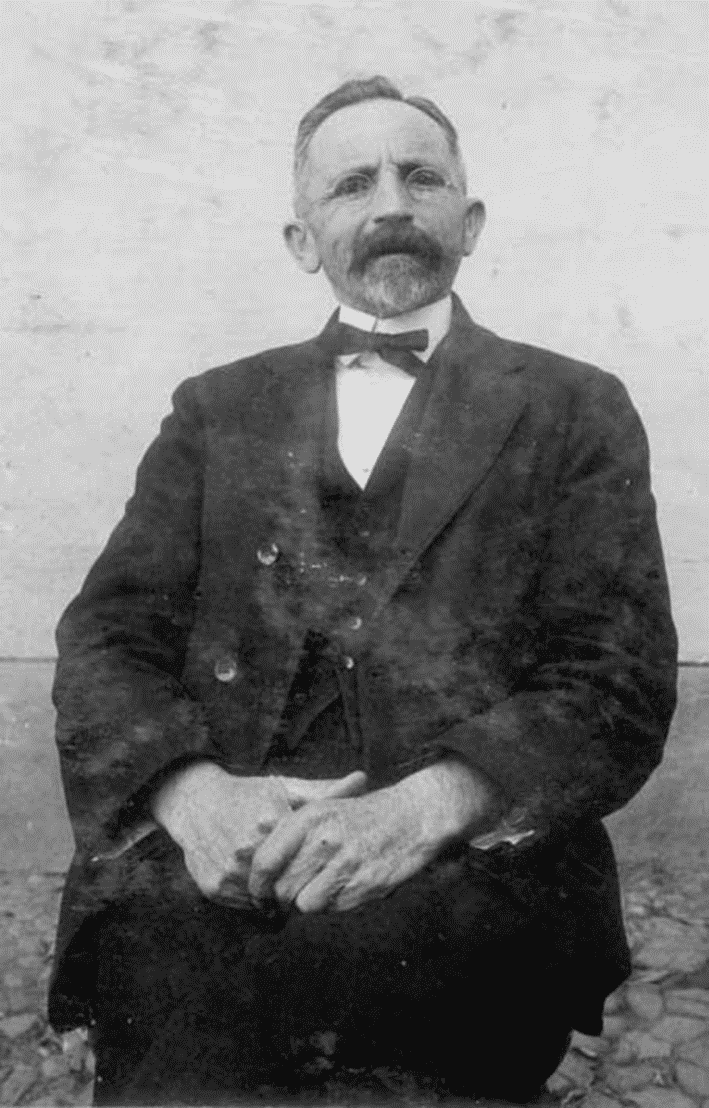
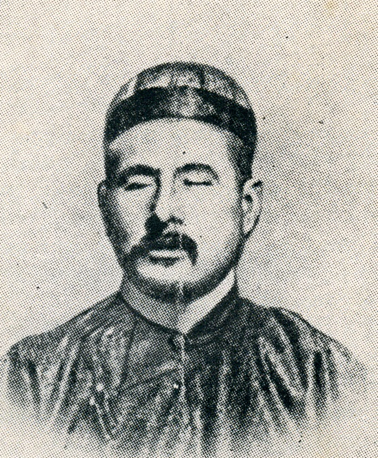
Chang Shen was a Manchurian in the late 19th Century who had a notorious reputation within a violent Buddhist sect in China.  He was a womanizer, an alcoholic, a thief, and a gambler.  People who knew him called him so pu wei te, meaning ‘one without a particle of good in him.’  In his cruelty, he turned his own daughter out of his house and forced her into a life of prostitution.  He later drove his wife out of his home.  Seventeen days later, he lost his eyesight.  People who knew him considered his blindness a judgment from the gods for his evil.

In desperation, he traveled, blind, to a missionary hospital over a hundred miles away in Shenyang with the hopes they could help his eyesight.  En route, he was robbed of what possessions and clothing he carried with him.  The missions team, at the time very discouraged from a lack of progress in reaching people, described him as “…destitute and desolate, with scarcely any clothes left upon him, and in the last stages of dysentery.”  They felt a great deal of compassion for him and, since the hospital was full, one of the missionaries gave up his own bed for him.

Attending chapel, ‘Blind’ Chang heard the Gospel for the first time.  Immediately, he understood his own sin and need for a Savior and he joyfully gave his life to Christ on the spot.  A month later, his bodily health restored but his eyesight still gone, he desired to return to his village and asked the missionaries to baptize him before he left.  This request the missionaries denied, telling him, “We will visit you in your village in a few months.  If you are still living a consistent life for Christ, we will baptize you then.”  This disappointed Blind Chang, but he agreed.  His excitement for his newfound faith was evident.  He said, “None of my people have ever heard even the name of Jesus, or of His offer of the gift of eternal life; and do you think that I can keep that to myself any longer?”

Traveling home, he spoke of his new Savior to everyone he came into contact with.  Some listened, others treated him cruelly – encouraging their children to throw rocks at him, or siccing their dogs on him.  As a man without any direct human encouragement, and without eyesight, God stepped in and provided comfort to him directly.  He had dreams of Jesus encouraging him, and stayed true.

His village had a large elm tree where villagers would sit in the shade on hot summer days.  It was there that Blind Chang found a ready audience.  He spoke to whoever was sitting there, sharing the Good News of Jesus with all.  Five months later, in October of 1886, when one of the missionaries came to visit him, the missionary found not only Chang, but a number of other converts – saved by God through the witness of a blind man who knew only the rudimentary Gospel and a single hymn he had been taught at the mission hospital.  The missionary examined the new believers, and the nine people he baptized that day became the nucleus of the village church.  The land around the elm tree was later purchased by the mission for a church and a center of evangelistic work in the region.

That missionary later wrote, “One thing of which I am well assured, is this: Blind Chang, with little knowledge, but with a heart thrilled to the core with the truth which he knew, had in these months done more work and better work for the Kingdom of Heaven than half-a-dozen foreign missionaries could have done in as many years.”  By 1895, Chang had worked his way around to nearby villages, sharing his faith and had personally led over 500 people to Christ – many of them of the worst of society: highway robbers, opium addicts, and prostitutes.

The missionaries told Chang of a school for the blind in Beijing, where he could learn to read God’s Word in Braille.  Amazed that he could do so, Chang immediately set out.  Finding a warm welcome there, he mastered Braille in 3 months.  They wanted him to stay longer, but he insisted on returning to his village to continue his evangelistic work.  He continued his reading, memorizing large portions of the New Testament, much of the Old Testament, and many Psalms.  The sight of a blind man, with the background they all knew well, reading God’s Word with his fingertips, continued to win native Chinese to Christ.

In 1899, the Boxer Rebellion began in China – an uprising against the westernization of China.  Missionaries and Chinese converts were prime targets for violence.  Away from his home in a village, when word of the violence reached him, his friends hid Blind Chang in a mountain cave.

Nearby, fifty believers were rounded up and sentenced to die.  One of the unbelieving residents told the Boxers, “The man you really want is Chang Shen.  If you kill him, you will stop the foreigner’s religion.”  The executioners told the men that if any one of them would lead them to Chang Shen that all would be spared.  All refused.  Word of this reached Chang Shen and he insisted on being taken to die in their place.  His companion reported that there was an eagerness in him as he traveled to save his friends.

On July 19th, 1900, he was arrested and bound.  He was taken to the Buddhist Temple and instructed to offer incense.  Chang refused.  He was treated roughly and he still refused.  Three days later, he was beheaded and his body burned.  After his body burned the Boxers fled in terror saying, “We have killed a good man!”

After the Boxer Rebellion was over, the government of Manchuria ordered a stone monument to be erected in honor of Blind Chang.

e-mail from Christian History, 22 July 2021

https://articles.asiaharvest.org/china-resources/liaoning/1900-blind-chang

https://www.persecutionblog.com/2010/07/he-was-blind-but-now-he-sees.html


Saturday, April 29, 2023

Samuel Lamb

Lin Xiangao (known in the West as Samuel Lamb) was raised as a believer, born the son of a Baptist pastor in 1924, in the mountains overlooking Macau, China.  Following in his father’s footsteps, he preached his first sermon at age 19, shortly before Mao Zedong’s full-scale persecution of the Church.  Lamb was first arrested in 1955, accused of being a counter-revolutionary. 

He served 18 months before his release, and was arrested a second time in 1958, this time sentenced to twenty years of hard labor.  He served his sentence in a coal mine, where his task was to couple coal cars together.  He worked underground in low light and in very hazardous conditions, and continued to teach as he was able.  Working like this killed or severely injured many men, but Lamb emerged from his sentence in 1979 unharmed.  His wife died a year before his release, but Samuel was not allowed to attend her funeral.  He said later that her death “was like an arrow from the Almighty, until I understood that God allows the pain, the loss, the torture; but we must grow through it.”

Lamb was targeted mainly for his refusal to merge his house church with the Three Self Patriotic Church (TSPC), the state-controlled church.  The TSPC forbade the teaching of the Gospel to children under 18 years of age, denied many fundamentals of the Christian faith such as the Virgin Birth and Christ’s literal, physical resurrection.  China’s control of the state church led to their teaching principals geared more toward government support rather than Christian beliefs.

In 1979, Lamb resettled in Guangzhou, where he began to teach English and converted many of his students to Christ.  He soon restarted his house church, which quickly grew and had to move to a much larger building.  The church continued to grow, and began to occupy multiple buildings and had meetings several times per week.  According to the Open Doors organization, his church was a conduit for many thousands of Bibles and other Christian literature smuggled in from the West – Open Doors numbered the pieces of literature at over 200,000.  Even so, he adamantly taught his congregation that they should submit to the authorities in all things, except for when doing so directly opposed the teachings of the Scripture.

Suffering was a frequent topic of Rev Lamb’s sermons.  “I can understand Job’s victories and Job’s defeats,” he often said.  “It taught me that grumbling does not help.  Not against God and not against those who persecuted me.”  He taught what he called the “Holy principle of persecution”, which was that persecution has only one outcome: more growth for the church.

His church was raided again in 1990.  Lamb was arrested and his congregants were admonished not to attend services any longer, but Lamb was released the next day.  Though many in the church were intimidated into not coming the following week, Lamb and a few brave souls met the following Sunday without incident.  Soon the church was larger than ever, numbering over 5,000 regular attendees. 

Even though his congregation was still illegal, Samuel Lamb’s church was not bothered again, up to his death in August, 2013, at the age of 88.  Even so, he was prepared for more suffering.  He kept a bag packed with a change of clothes, shoes, and a toothbrush – prepared in the event of his arrest so he could just pick it up and go.  At his death, over 30,000 people spontaneously crammed the streets of Guangzhou to pay him homage.

His church was raided again just before Christmas, 2018, as part of the Communist Party’s new crackdown on Christian worship.  Since 2016, the Communists have sought an ever-increasing dominance over everyday life.  The government has banned online sales of the Bible, burned crosses, demolished churches, and forced many places of worship to close.  Many church members have been instructed by the authorities to sign letters stating they no longer believe in Christianity.  The church has, in many cases, again been forced to move underground and meet in secret.  If Samuel Lamb’s “Holy principle of persecution” is to be believed, we should be excited for the long-term spiritual growth of the church in China.

https://www.christianpost.com/news/death-of-pastor-samuel-lamb-leaves-hole-in-the-chinese-church-says-open-doors-usa.html

https://www.christianpost.com/news/chinese-police-raid-childrens-bible-class-shut-down-underground-megachurch.html

https://www2.cbn.com/news/news/china-strikes-again-shuts-down-third-underground-church-weeks

https://www.christianitytoday.com/news/2018/december/china-churches-early-rain-rongguili-wang-yi-samuel-lamb.html


Saturday, April 9, 2022

Hossein Soodmand, Martyr for Christ


Hossein Soodmand – Iranian martyr for Christ

Hossein Soodmand was born in Iran to a devout Muslim family and, while growing up, was taught to hate Christians.  When he was seven years old, he was taunting and throwing stones trying to break the water pitcher of a Christian woman in his village.  When the pitcher broke, he turned to run but tripped and fell, cutting open his knee.  When he saw the woman coming toward him, he feared a beating but was shocked when she cleaned and bandaged his wound and gave him a sweet treat.  His daughter later recalled that he never forgot her “unusual display of mercy and grace.”

As a young man, he was drafted into military service.  He took very ill and was transported to a hospital where an Armenian Christian cared for him, giving him a small cross and praying for him.  Hossein fell asleep and had an intense dream in which he remembered Jesus giving him something to eat.  When Hossein woke up, he was completely healed.

After leaving army service, he moved to the town of Ahvaz, where he sought out a group of Christians and came to faith – determined to serve the Savior who had healed him.  Christianity was not yet illegal, though certainly frowned upon, as this was before the 1979 Islamic Revolution when the Shah was deposed and the Ayatollah Khomeini rose to power.  He was, as with many Muslim converts, ostracized by his family for his newfound faith.  He spent some time doing Christian work in a school for the blind, and met his wife Mahtab there, one of the students of the school.  They had four children together and he pastored his children as lovingly as he pastored his flock.

By the time of the Islamic Revolution, Hossein had become a pastor under the Assembly of God denomination and had moved back to his hometown of Mashhad where he had established a growing church in the basement of his house. 

Hossein’s daughter, Rashin, later remembered that, when she was eleven years old, her father was arrested for the first time.  He spent a month in prison and was released with the threat of execution if he didn’t renounce his faith.  The authorities in his church offered him the opportunity to escape the country and he replied, “I am a follower of the great Shepherd of the sheep, our Lord Jesus Christ, and I am ready to sacrifice my soul for my sheep.  For me to escape from this persecution would cause the hearts of my flock to become cold and weak.   And I never want to be a bad example for them.  So, I am ready to go to prison again and, if necessary, to give my life.” 

His house church continued until his re-arrest in 1990.  He was placed into solitary confinement and later hanged for the crime of apostasy on December 3rd of that year – the trial and execution were something his family didn’t find out about until after the fact.  Hossein was buried in an unmarked grave in the area of the cemetery reserved for the accursed.  Having the opportunity to visit his grave 29 years later in 2019, the family found the area had been bulldozed as part of a planned expansion of the cemetery.  Nobody would tell them if his body had been exhumed.

Hossein’s son Ramtin became a pastor and Iranian Evangelical leader in his father’s stead before he was arrested in 2008 for the crime of apostasy.  A huge international outcry and the intervention of Amnesty International secured his release and safety for his family. 

His daughter Rashin currently lives in London, England, and continues the evangelistic work of her father and speaks publicly about the persecution of Christians in Iran.  She has a fantastic interview on YouTube on the Voice of the Martyrs page.

Pastor Hossein Soodmand remains the last person formally executed under Iran’s anti-apostasy laws.  A number of people remain under a death sentence in Iran, including a few directly tied to Pastor Soodmand, but Iran has become very sensitive to international pressure following Hossein’s death.  His martyrdom in one of the most hostile areas in the world to the Gospel remains a source of inspiration and comfort to Iranian Christians worldwide.


https://www.youtube.com/watch?v=BJfu5BJJe5U

https://www.youtube.com/watch?v=K_zjbwbmhE4

https://www.christianpost.com/news/iran-bulldozes-over-grave-of-pastor-executed-for-converting-to-christianity-after-seeing-jesus-in-dream.html

https://www.christiantoday.com/article/iranian.authorities.release.son.of.hanged.pastor/21739.htm

https://www.executedtoday.com/tag/ramtin-soodmand/


Saturday, September 7, 2019

Polycarp


One of our very early church fathers, Polycarp, was the Bishop of Smyrna (modern-day Izmir in Turkey) in the second century.  Born around AD 70, tradition tells us he was personally discipled by the Apostle John and was appointed by the Apostles as leader of the church in Smyrna – one of the cities noted in Revelation Chapter 2. 

Not much is known about Polycarp’s ministry, other than it being long and fruitful.  It is known that he was a fierce opponent of heretical teaching, including Marcionism and Gnosticism.  Some letters from him to the church in Philippi survive, instructing them to persevere in the faith and some practicalities in how to avoid financial dishonesty in the church. 

Bishop Polycarp is most noted for his death.  At the very old age of 86, during one of the Roman persecutions, some friends encouraged him to flee.  He reluctantly fled to an estate outside the city.  While in hiding, he claimed to have received a vision.  He did not reveal the details of the vision, but simply declared to his friends, “I must be burned alive.”  When the Romans caught up to him, he went willingly.

During his trial, the Roman Proconsul conducting the trial felt sorry for him because of his advanced age.  Polycarp was offered immunity if he would just speak the words, “Caesar is Lord” and offer a pinch of incense to a statue of Caesar.  Polycarp responded, “Eighty-six years I have served Him and he has never done me wrong.  How, then, can I blaspheme my King who saved me?”  Polycarp’s refusal greatly angered the official, and he condemned the elderly Bishop to be burned at the stake.  Polycarp replied, “Come, do what you will.  Why do you delay?”  When the soldiers carrying out the execution moved to nail the bindings in his hands to the stake he refused, stating that God would give him the strength to remain in the fire.

Polycarp died while praying aloud.  The early accounts of his death indicate that many people who witnessed his death came to faith.

Packer, J.I., 131 Christians Everyone Should Know, Holman Publishing, 2000.