Saturday, September 7, 2024

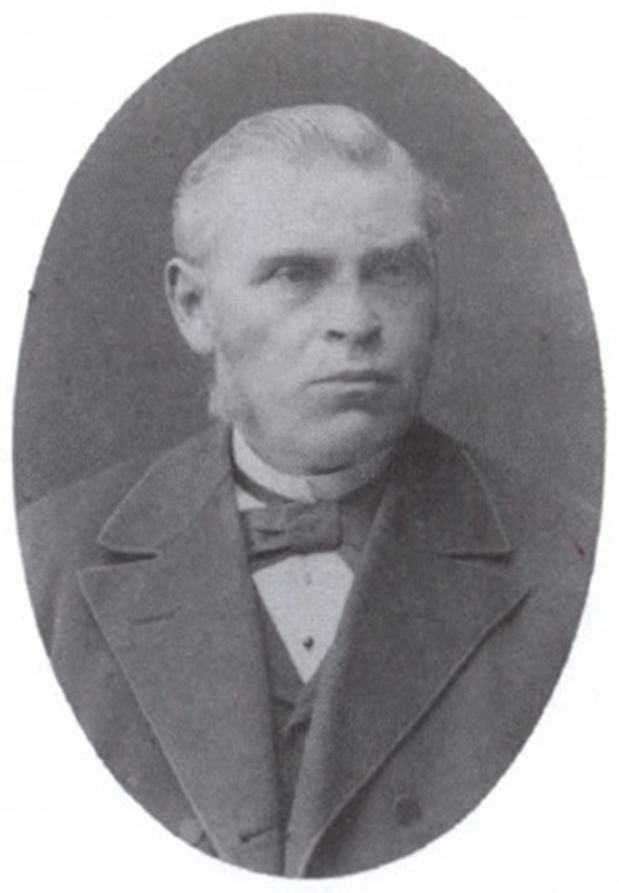
Robert Sheffey

Born in 1820 in the little town of Ivanhoe in far southwestern Virginia, which today has a population of about 550, Robert Sheffey was known as an odd preacher.  His contemporaries were in agreement that he “couldn’t preach a lick” but his influence and spiritual power were known far and wide.

Born to people of relative upper class his parents encouraged him, like his siblings, to enter a professional career but his salvation experience at age nineteen revectored his life and he sought God’s will for his life.  At age 24 he married a young woman named Elizabeth.  He tried his hand at farming, clerking at a local store, and even teaching children, but God directed his heart into the proclamation of His Word through preaching as a Methodist circuit-rider. 

Widowed after ten years of marriage, Robert Sheffey developed some eccentricities.  Many stories speak of his concern over animals.  He regularly righted turned-over beetles or turtles and even halted funeral processions to gently move insects out of the road to keep them from being crushed by wagon wheels.  One story has him stopping by a puddle and collecting all the tadpoles, transferring them to a creek where they would have a better chance at survival.  He took special care of his horse, often dismounting and walking beside the horse when going up a grade.

His concern for the lostness of people was even more prevalent.  He often gave his socks those in need, many times pulling them off of his own feet.  He gave his coat to those shivering on cold days.  He even once gave his own horse to a stranger whose horse had died while pulling a heavily loaded wagon.

As noted before his rhetorical skills were somewhat lacking, but nobody could dispute the work of God as he preached.  Sometimes, he would step up to the pulpit and prostrate himself on the floor in prayer, leaving the congregation in awkward silence.  Despite the oddities, his altar was usually full of the penitent and many lives were changed.

His powerful prayers, however, evoked the most awe.  He publicly prayed against liquor stills and those who ran them.  One local minister recounted his prayers against three stills on a creek near to where they were meeting.  The owner of the first, a man of good health, suddenly dropped dead.  The second caught fire.  The third was obliterated when a large tree fell on it.  Men were said to have left the area rather than become the subject of his prayers.

Sheffey held several weeks of meetings in his hometown of Ivanhoe.  When the citizens rejected his message, preferring the life of sin that was characteristic of many prosperous mining towns, Sheffey publicly shook the dust off his feet and left the town.  One resident later remarked, “Whether you believe in it or not, after that happened, we lost everything.”  The fortunes of the town took a sharp downturn.  Entire buildings and houses disappeared into sinkholes.  The town was never the same.

Robert Sheffey died in 1902.  His stories were collected and placed into a book that was published in 1974.  A movie was made about his life entitled ‘Sheffey’, which was re-released in 2020, the 200th year after his birth.


Christian History e-mail, 04 July 2021

https://today.bju.edu/perspective/rescuing-bugs-cursing-towns-eccentricities-robert-sheffey/

https://iblp.org/robert-sheffey-the-power-of-prayer/


Sunday, August 25, 2024

John Hunt


As a boy in the early 1800s, John Hunt prayed.  He prayed for protection from the many things that made him afraid: dogs and thunder among them.  As he grew older, his prayers grew less frequent and his faith drifted.  He was clumsy and was bullied on the farm where he worked.  He realized his own lack of faith and often promised the Lord that he would change, but did not.

Then, illness set in and John faced a literal fight for his life.  He knew then that his promises were in vain.  Desperately, he vowed that if God would spare his life that he would serve Him the rest of his life.  Upon his recovery John told godly neighbors about his promise, in a bid to keep himself accountable for his own spiritual growth.  He attended church and read the Bible and other books in his spare time.  He prayed about what God would have him to do.

God drew his heart toward missions.  He had a mind to go to South Africa – an arm of the British Empire at the time.  South Africa had a modicum of civilization and some advanced medical care available for his fiancĂ©e, Ms Hanna Summers, who was in poor health.  John, however, received a direct appeal to go to Fiji.  At the time, Fiji was known as the home of savage cannibals.  Despite the incivility of the place, Hanna agreed to go.

The couple sailed from England in 1838.  En route, they refused a lucrative offer to remain in Australia and arrived near Christmas Day of that year.  John and Hanna mastered the language fairly quickly, but initially saw few conversions as they moved from island to island.  At times, they were treated cruelly – one king threatened them with death if they closed the windows to dull the smell of roasting bodies near to their home.  Eventually, however, they found an island that was receptive and revival broke out. 

Lives of the natives were changed dramatically.  John translated the New Testament into the native language and worked tirelessly to fan the embers of this small flame.  Overwork led to dysentery and John became deathly ill.  The islanders who were taught so well by John and his example gathered around him praying, asking God to take any ten of them rather than him.  Despite their prayers, John Hunt slipped into eternity as the young age of 33.

The seeds he planted, the zeal of the islanders he nurtured, and missionaries who followed him were all used by God for a great awakening in the Fiji Islands.  Within 50 years of John Hunt’s arrival on the islands, there was not a single person remaining who professed the old religions.


Almost entirely from:

https://www.christianity.com/church/church-history/timeline/1801-1900/john-hunt-arrived-in-fijis-cannibal-land-11630453.html


Saturday, August 10, 2024

Martin Rinkart


The Thirty Years’ War (1618-1648) was the most destructive war ever fought in Germany, including the two World Wars.  While a lot of political drama added to the tinder, the main conflict was between the fragmented Catholic states of the Holy Roman Empire and the various Protestant states.  The war began when Ferdinand II, the Holy Roman Emperor, made moves to conquer the various Protestant states in Bohemia, precipitating this deadly conflict which eventually drew in most of the states in Europe, including Denmark, Sweden, and France.  Complex alliances were formed: the Catholics in France supported the Protestants in Germany, the Swedes and Danes allied with the Lutherans, Spain sided with the Emperor, France got involved to weaken their rival Spain.

Eilenburg, in today’s Eastern Germany, was a walled city and therefore a refuge for war-displaced people.  As soldiers from each side came through, they compelled the citizens of Eilenburg to quarter and provision them.  As you can imagine, food was scarce and times were very hard.

When the Thirty Years’ War began Eilenburg had a new pastor, Martin Rinkart.  Martin did his very best to tend to his flock as well as provide for his young family.  Overcrowding and hunger led to plague in 1637.  Of the four pastors in Eilenburg one fled and two others succumbed to disease, leaving Martin the sole pastor for the town.  In addition to giving spiritual counsel, he performed as many as 50 funerals a day, including that of his wife.  At times, large trenches were dug for mass burials.  Over 8,000 died in the city.  Following the plague came famine.

In the midst of this famine the Swedish army returned in 1639, demanding 300,000 florins (roughly $2-3M) as a tribute.  Rinkart, now the leading spokesman for the city, spoke with the General requesting they lower their demands.  Up the general’s refusal, Martin returned to the town and addressed the survivors saying, “Come, my children, we can find no hearing, no mercy with men, [so] let us take refuge with God.”  The sight of this pastor leading his town in prayer so moved the General that he lowered his demand to 2,000 florins.

The war continued.  As the long war finally drew to a close, Martin found himself the object of much criticism from his own townspeople.  He has indebted himself tremendously to be able to feed himself and his children, all the while giving generously.  He had also indebted the town in his efforts to feed those survivors in his city.  When a permanent peace finally came in 1648, Martin Rinkart was exhausted and the following year the 63-year-old pastor passed away.

Sometimes, the most trying times drive God’s people to the deepest faith.  It was in the midst of literal war, famine, and plague that Martin penned a hymn of Thanksgiving for his church:


Now thank we all our God; With heart and hands and voices;

Who wondrous things hath done; In whom His world rejoices;

Who, from our mother’s arms; Hath blest us on our way;

With countless gifts of love; And still is ours today.


O may this bounteous God; Thro’ all our life be near us;

With ever joyful hearts; And blessed peace to cheer us;

And keep us in His grace; And guide us when perplexed;

And free us from all ills; In this world and the next.


All praise and thanks to God; The Father now be given;

The Son and Him who reigns; With them in highest Heaven;

The one eternal God; Whom earth and heav’n adore;

For thus it was, is now; And shall be evermore.


https://historyguild.org/the-thirty-years-war/

https://g3min.org/thanksgiving-during-a-plague-martin-rinkart-1586-1649/

https://breakpoint.org/giving-thanks-in-dark-times-the-life-and-labors-of-martin-rinkart-1586-1649/


Saturday, July 27, 2024

Gottfried F. Alf

Gottfried F. Alf

Do you really believe that the Gospel is “the power of God unto salvation, to everyone who believes…” (Romans 1:16)?  God works in each individual heart in individual, often unexpected ways.  In 1850, the town of Mentnowo, a German colony near Warsaw, Poland, had no minister.  Lutheran ministers were few and covered very large areas.  The once red-hot Lutheran faith had become a flicker of its former self and spiritual lethargy was the norm among both clergy and lay people.

In cases like that at Mentnowo, where there was no local minister, it was expected that a schoolteacher (who presumedly knew how to read) would lead Sunday worship and read a sermon.  In Mentnowo, this task fell to nineteen-year-old Gottfried Alf.

Taking his task seriously, Gottfried began to study the Bible to better understand the sermons he was reading.  Reading intently for over two years, he realized his own lost condition and understood that salvation came only by the work of Christ.  In 1853, he committed his life to Christ.

Gottfried shared what he had learned with his students.  Many of them came to faith, as well as many parents.  Other parents resisted and complained to the over-extended pastor of the region.  This pastor told him to hold no more Bible teaching and no more prayer meetings.  When he refused to quit, they orchestrated his firing from his job and kicked him, his wife, and their young child from their home.  Now without income, his father took the family in and allowed Gottfried to farm some of his land to provide for his family.

Convicted of the truth of the Gospel and with an insatiable desire to share, Gottfried began making trips around the region to preach.  People were saved.  Lives were changed.  The status quo was disrupted.  As a result of this, Alf was arrested and beaten by the Lutheran authorities.  Realizing he no longer had a place in the church into which he was born, Gottfried became a Baptist – incurring the wrath of both the Lutherans, the local Russian Orthodox clergy, and his own father who threw him off his land.  By 1866, the year overt persecution ceased, hostile authorities in the regions he visited had beaten and/or imprisoned him at least thirty times.  In some cases, food was withheld, chains were put on deliberately tight, medical care was neglected.  Other times he was exposed in chains to crowds who would heckle, jeer, and threaten.  Despite these difficulties, Gottfried continued to preach and work.  He founded many churches in Poland and in Ukraine.

A biographer records just one of his imprisonments with these words:

“Not far from Adamowo, although he was carrying a pass, Alf was stopped by two of his enemies. They found, however, that Adamowo was not listed in his pass and took him to the magistrate in Wiszkow…. Since he carried tracts in his travel bag, he was labeled a sectarian and was thrown in prison on May 13 for four days. For the first three days he was among criminals and without food or drink; on the fourth day a German smith heard of him and brought him food. He was then transported to Pultusk, where he was imprisoned eight days. He was held here so long that his pass expired, which was further cause for punishment. He was then ordered to Przasnysz, a particularly torturous journey by foot since he was not feeling well. Fortunately, brethren with a wagon came searching for him and carried him to Prasnisz, where he remained imprisoned for four days until May 28.
The authorities then sent him to Chazecharow, where on the next day the magistrate ordered him to pay ten rubles. Alf sent in the ten rubles, but that did not settle the matter.… Alf was ordered to deliver the money personally with a written declaration that he had not traveled with any evil intent and would not spread a false faith but only the pure Christian religion…. [By] June 3, Alf had endured twenty-one days of suffering and approximately 1,300 kilometers [808 miles] of tiresome travel. After four weeks he arrived home…. His wife and most of the brethren had given him up as lost and dead.”

Gottfried Alf’s persistence and suffering paid off.  By his death in 1898, many thousands of people had come to faith.  Many of his converts later emigrated to the United States, establishing churches there.


Christian History e-mail: 28 Nov 2021

https://www.captivefaith.org/post-reformation/alf/


Saturday, July 13, 2024

Wang Ming-Dao

Wang Ming-Dao

In 1920, a young Chinese man named Wang Ming-Dao, who had been a Christian since childhood, resolved to take his faith seriously.  Writing out a list of his sins, he prayed and vowed to leave them behind.  Praying until he received assurance of forgiveness, he arose a changed man and zealously studied the Scriptures.

A teacher at a Presbyterian boarding school in Beijing, he came to believe the Biblical method of Baptism to be immersion.  Stubbornly holding to this conviction, and teaching it, led to the loss of his job.  Though the loss of his job discouraged him, he remained faithful and began preaching on his own and with a number of evangelistic campaigns in 1923.  He pastored a church called the Christian Tabernacle and also began publishing a quarterly Christian magazine which was widely read.

Beijing fell to Japanese forces in 1937.  By 1939, the Japanese occupiers insisted that all publications print patriotic slogans supporting the Japanese military.  Wang faced a dilemma: become a political publication or shut down.  He chose a third option: publish anyway without the propaganda.  He faced immense pressure from the Japanese and from other Christians and Christian groups which had capitulated to their captor’s demands.  Wang refused to join, and preached on the suffering, faithfulness, and protection that Daniel and his friends faced in Babylon.

The fall of Japan in 1945 led to the rise of Mao-Tse Tung and Communist rule in 1949.  The Communists established an organization which came to be known as the Three-Self Patriotic Movement (TSPM) – an organization and a set of guidelines for Christian churches which included severing all ties with Western churches and organizations, agreeing to a rewritten Bible, denial of core beliefs including the Incarnation, the virgin birth, the resurrection, the Trinity, and other abuses of power.  Wang Ming-Dao realized this was intended to bring the church under state control and, despite intense pressure, he felt it was his duty to resist and continue to teach uncompromising Biblical truth.

Wang published a number of books between 1951 and 1954, proclaiming the Gospel and defending Biblical truth.  The TSPM ramped up its pressure and in 1954 convened a meeting to accuse him of crimes but, like Daniel in the Bible, they could find no fault with him.  Into early 1955, attendance at the Christian Tabernacle reached record numbers.

On August 7th, 1955, police arrived at his home around midnight and arrested him, imprisoning him without a conviction.  At the time, he did not realize that his wife had been imprisoned as well.  To the Communists, his defiance was counter-revolutionary and a severe crime.  He was subjected to daily interrogations and torture and then subjected to further torture by especially-placed cell-mates.

After over a year of this pressure, Wang was informed of a number of the detainment of Christians he was close to.  Worse yet, he was told of his wife’s imprisonment and deteriorating health.  Under such intense personal pressure, Wang broke and signed a document stating he was a counter-revolutionary and confessing to his ‘crimes.’

While TSPM leadership was elated, Wang was crushed at his actions.  Plagued with guilt and remorse over his confession he, with his wife’s support, reneged on his promise to join TSPM and they were both re-arrested seven months after their release.

Wang served an additional 22 years in prison, subject to the same daily torturous interrogations faced before.  However, the Lord stood by him and he remained faithful.  He clung to a verse from Micah, “When I fall I shall arise, when I sit in darkness the Lord will be a light unto me. I will bear the indignation of the Lord because I have sinned against Him until He pleads my cause and executes judgment for me.” (Micah 7:7).

In 1979 China – suffering from famine, a result of Mao’s disastrous policies, let many prisoners go, including Wang Ming-Dao – malnourished and nearly blind from his ordeal.  He settled in Shanghai and preached again, as God gave him opportunity.  In his final years he became one of the leaders of the house-church movement which had sustained the Gospel through the dark years of Communist oppression.

Wang Ming-Dao died at home in 1991.  He shows us that Christians, even when they fail, can have a radiant witness in their faith and do great things for the Kingdom of God.

https://www.thegospelcoalition.org/article/wang-ming-dao-faithful-political-coercion/

https://www.evangelical-times.org/the-fall-and-rise-of-wang-ming-dao/


Saturday, June 22, 2024

Emma Whittemore

Used to the glitz and glamour of the social scene in late 19th century New York City, Emma Whittemore had it all.  With her husband Sidney, she enjoyed all that wealth had to offer.

One day, a friend persuaded her to attend a meeting to hear an evangelist at the local YMCA.  Unbeknownst to her, a separate friend had persuaded her husband to attend the same meeting.  Both were deeply convicted by the message, and both went forward to, in her words, make “firm resolutions to live a different life.”  They then returned home to pray and determine what that commitment meant.

Emma’s friend called on her again to see if she would be willing to accompany her to hear a man named Jerry McAuley.  Jerry, an ex-con and reformed alcoholic, had opened the nation’s first mission to the homeless, Water Street Mission.  They first resisted, but then agreed to go, “just this once.”  Emma spoke often of that first evening at the mission.  They heard cursing, saw fighting in the open, and saw clawing women dragged away to the police station.  The sights, sounds, and smells were something her refined self had never experienced. 

Walking into the meeting, Emma and Sidney whispered condescending words to each other about the people they were gathered with.  Their haughty attitude changed, however, when Jerry finished preaching and opened the floor for testimonies.  One after another, slum tenants stood up and praised God for deliverance from addiction, strength amidst temptation, and daily deliverance from sin. 

Astonished, both Emma and Sidney’s hearts sank in shame at the thought of their own pride.  They noticed a genuineness among the people – truly transformed lives – and not the veneer they knew they possessed.  Emma later wrote of her life prior to this meeting as a “useless life.”  Sidney stood weeping, covering his face with his hands in shame, and asked for prayer.  Jerry called him up to the front, and Emma followed.  Spontaneously, a group surrounded them, as Emma later wrote, “a drunkard, a thief, and a tramp on my husband’s side, and on my side one or two poor women…” and the drunkard led them in prayer for the couple.

Emma wrote of that night, “From that night I date the giving up of a worldly life.”  Their “just this once” trip to the mission turned into the first of many visits.  Jerry’s wife Maria mentored Emma, showing her how to minister to poor women and how to give her testimony.  Emma’s heart broke for the horrors she saw among the street women but she continually prayed, asking God for strength to continue.  He provided it.

Emma opened her first home for fallen girls on October 25th, 1890.  She gave it the name “Door of Hope.”  Emma felt God was leading her to trust in Him alone for provision, so she never held a fund-raiser and never voiced a need.  Day by day, sometimes hour by hour, God provided.  Funds came in, just in time, time after time to meet the needs of Door of Hope.

Within four years, Door of Hope had helped 325 girls.  Emma’s primary concern was always that they would know the power of Christ in their lives.  As she put it, she could take them out of the dens of vice, “but only Jesus can get the vice out of the girls.”  Her second goal was to turn these women into evangelists, active in their efforts to share with others.

Door of Hope went international.  When Emma died in 1931, there were at least 97 homes around the world, in the US, Canada, Great Britain, Germany, Africa, Japan, and China.  The great evangelist Wilbur Chapman said of her, “She has probably been instrumental in saving more fallen women than any other one person.”

https://www.christianity.com/church/church-history/timeline/1801-1900/emma-whittemore-and-door-of-hope-11630627.html


Saturday, June 8, 2024

Gladys Aylward

Gladys Aylward

Born north of London in 1902, Gladys Aylward left school at the age of fourteen, working as a parlor maid in the homes of London’s wealthy class.  Raised in a Christian home, she nevertheless allowed herself to be taken in by the seduction of wealth via her work.

In her mid-twenties, she went to a revival meeting and recommitted her life to Christ.  She became very active in sharing her faith.  Learning about missions work in China, she felt very convicted to go.  Gladys was accepted to training with China Inland Mission in 1929, despite her lack of education.  She excelled in the practical work, but failed the classroom work – having a very tough time with the Chinese language.  Her classroom failures resulted in her being dropped from consideration for the organization.

Undeterred, she went back to work as a maid, planning to get all the expenses to pay for herself to go to China within three years and secured the patronage of a lady missionary already on the field.  Her frugality and prayers resulted in earning all she needed in less than a year.  Traveling by train through Siberian Russia into China, at a time of war between the two countries, the trip itself was fraught with adventure and danger, including being detained by Russian authorities and having to covertly enlist the aid of the British Consulate to smuggle her into China.

Her initial job was taking care of mules.  Her mentor had set up an inn and a mule stop for travelers.  The provided a place to sleep, food to eat, and care for the animals.  In this context, Gladys became very fluent in Chinese and used the opportunity to witness to many travelers, and won many to Faith.

After her mentor passed away, Gladys was offered a job by the Chinese government as a foot inspector.  The government of China had recently outlawed the practice of “foot-binding” – tightly binding the feet of young girls to change the size and shape of their feet as they grew.  Gladys had the authority of the government to go into homes and check on the feet of these girls.  This opened many doors to many families who otherwise would have never in their lives met a Christian, let alone an evangelist.  The Gospel was shared hundreds of times in this context, and many more were won to faith.

In her time there, at one point the local leader instructed her to intervene in a prison riot.  At 4’ 10” tall she was hardly an imposing figure, but the leader had heard her speak that a Christian had nothing to fear and directed her to walk into the prison and stop the riot.  Stepping in the midst of the angry mob she shouted, “I cannot hear when everyone is shouting at once!  Choose someone to be your spokesman and send him to me!”  The designated person told her of overcrowding, lack of food, and a hopelessness among the inmates.  Gladys promised to advocate for reforms and oversaw changes that brought in regular food.  She arranged for looms and a grindstone for grain so that the prisoners could be productive and useful in their incarceration.

In 1936, she saw a woman and a young girl begging by the road.  The young girl had sores and was obviously malnourished.  Speaking to them, she became certain that the child did not belong to the woman but was there as a ‘prop’ to aid in begging.  Gladys purchased the child for a small amount of money – this child becoming the first of over 100 children rescued by Gladys in the next two years.

In the Spring of 1938, Japanese bombs began to fall on the city.  She initially tried to stay but as the fighting got closer to the city, Gladys knew she had to leave with her children.  The Japanese had blocked the main roads leading into and out of the city, so she had to take her over 100 children over treacherous mountain paths.  Their food ran out, but that 12-day journey was rife with God’s blessings.  One night, a Buddhist priest hid them in his temple while they slept.  Another night, a group of Chinese soldiers came across them – providing them with food and guarding them while they slept the night.

Gladys had hoped to find boats waiting to help them cross the Yellow River, but when they arrived all the boats were gone.  Broken, Gladys broke down and wept until some of the children approached her and asked why they couldn’t ask God to part the sea for them as He did for the Israelites.  Admonished, Gladys called the children to her and they prayed and sang hymns.  Hearing the music, a Chinese officer found his way to them and was able to arrange for some military boats to transport them across the river to safety.  When the children had reached the safe haven, Gladys collapsed.  Taken into medical care, it was discovered she had Typhus. 

Gladys Aylward took many months to recover.  Greatly weakened, she was flown back to London where she took many opportunities to speak about the need for the Gospel in China.  After the war, she returned to China.

When the Communists took over and expelled Christian missionaries, Gladys moved to Taiwan and established in orphanage, taking in abandoned children.  She died in 1970 and is buried in Taipei.

The story of Gladys Aylward is captivating, and it was while she was still alive.  In 1957, a biography about her was published, entitled The Small Woman.  The book became the impetus for a 1958 movie called The Inn of the Sixth Happiness starring Ingrid Bergman in Gladys’ role.  When Newsweek magazine reviewed the movie and summarized the plot a reader wrote in, believing the story to be fiction, to say, “In order for a movie to be good, the story should be believable!”

Gladys Aylward appeared to be an unlikely candidate for mission work, but God chose her and gave her great determination to do the work.


https://www.ligonier.org/learn/articles/missionary-gladys-aylward

http://justus.anglican.org/resources/bio/73.html

https://en.wikipedia.org/wiki/Gladys_Aylward