Saturday, April 6, 2024

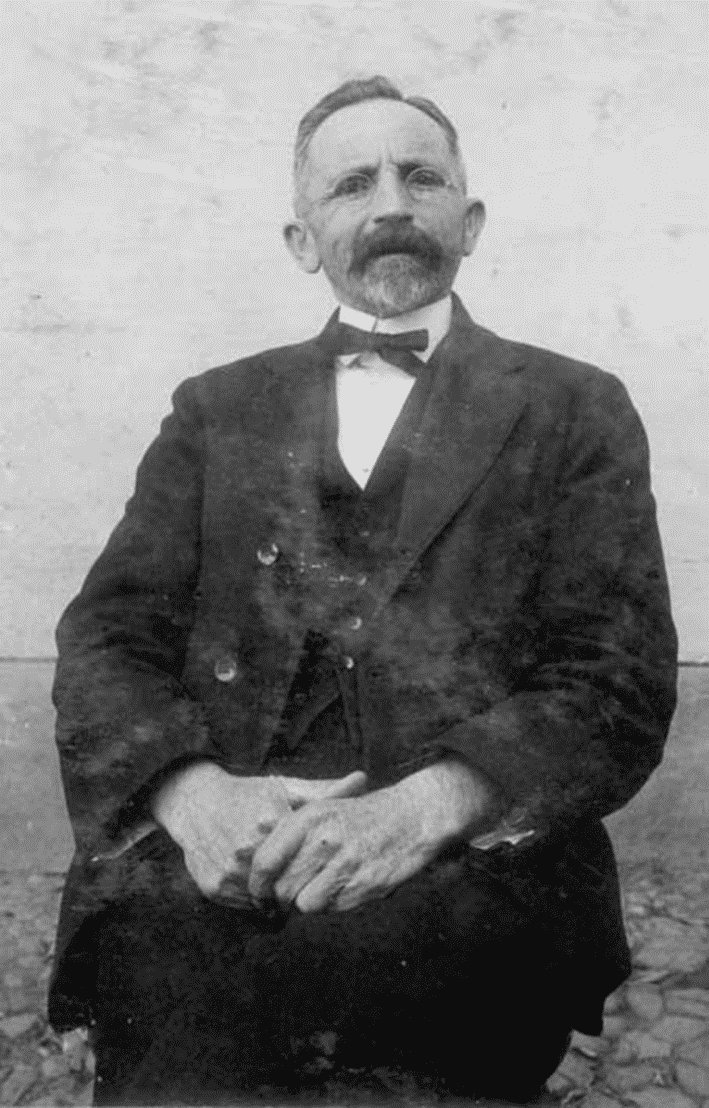
Cameron Townsend

Cameron Townsend

William Cameron Townsend was born into a Christian family in Southern California in 1896, the fifth of six children.  He enrolled in college after High School and, during his junior year, 1917, a missionary from an organization called the Student Volunteer Movement (SVM) spoke to the class, challenging them to give their lives to the ministry of evangelism.  Cameron spoke with the missionary and committed himself to the cause of SVM.

Cameron had previously enlisted in the California National Guard to serve his country in World War I.  He applied for, and surprisingly received, a discharge to instead go onto the mission field in Guatemala.  He committed to sell Spanish-language Bibles there for a year.  Nearing the end of his year-long commitment, Cameron was approached by a native Cakchiquel Indian asking him what he was selling.  He explained that it was the Bible, and it was God’s Word to him.  The man flipped through the book, then condescendingly asked, “If your God is so smart, then why doesn’t he speak my language?”  Learning more about these natives, Cameron was astonished to find that they were a group of about 200,000 people on the margins of Mexican society, many of whom spoke no Spanish at all.

The man’s remark impacted Cameron so much that he ended up remaining in Guatemala an additional 13 years, devoting that time to translating the Bible into the Cakchiquel language.  To do so, he had to invent an alphabet and a system for writing, and commit time to education of the people.  When his mission organization chided him for spending so much time in translation and less time in evangelism, he wrote back, “The greatest missionary in the Bible in the mother tongue.  It needs no furlough and is never considered a foreigner.”  He focused not just on the linguistic needs of the natives, but arranged with other mission groups for medical and vocational assistance as well.

Understanding that the Cakchiquel Indians were but one of thousands of unreached people groups, Cameron sought to expand his vision.  He returned to the United States in 1934 and founded an organization called the Summer Institute of Linguistics (SIL).  SIL’s focus was technically on preserving linguistics of indigenous cultures – preserving oral traditions and history in the native tongue – and in literacy education.  This secular emphasis opened doors for missionaries in many closed countries.  Partnering with SIL was Townsend’s other organization, Wycliffe Bible Translators, whose purpose is decidedly spiritual: Bible translation and missionary activities.  Providing logistical and technical support to both organizations was yet another organization, the Jungle Aviation and Radio Service (JAARS).

Today, the services of SIL International remain true to the intention of “Uncle Cam” in providing literacy services worldwide.  SIL is the most extensive linguistic operation in the world – currently involved in 1,341 communities in 98 countries and impacting nearly a billion people, per their website at the time of this writing.

Nearly a century after the finishing of that Cakchiquel Bible, Wycliffe Bible Translators have translated the full Bible in more than 550 languages, the New Testament in over 1,300 languages.  They estimate that about 1,800 languages still need a Bible translation to begin.

Cameron Townsend introduced the idea of “people groups” and “heart language” into the modern study of missions.  “Uncle Cam” once said, “The greater need is where the greatest darkness is.  Our orders are to forget self and to give our lives in service for the Master.”  His vision has guided nearly a hundred years of missionaries.  When he passed away in 1982, he was lauded as one of the three most impactful missionaries of the 20th century.


docs.wixstatic.com/ugd/33c277_a5294400facb93dcd183b3ed1d3e46fb.pdf

https://en.wikipedia.org/wiki/William_Cameron_Townsend

https://www.wycliffe.org/blog/featured/a-man-with-a-vision

https://encyclopediaofarkansas.net/entries/william-cameron-uncle-cam-townsend-4453/

https://www.thetravelingteam.org/articles/william-cameron-townsend

https://home.snu.edu/~hculbert/townsend.htm

https://www.sil.org/


Saturday, March 9, 2024

Saint Lawrence

Saint Lawrence

Lawrence, martyred in the third century, is one of the more recognized ‘saints’ of the Roman Catholic Church.  A staunch believer and a personal friend of Pope Sixtus II, he was asked in the year 257, at age 32, to be one of the seven Deacons in Rome.  In his case, it was a great position of trust which included care and maintenance of the treasury of the church and distribution of alms to the poor.

A year after he was appointed, the Roman Emperor Valerian issued an edict that all leaders in the church should be put to death and all church properties and wealth seized.  In the middle of Church services, Pope Sixtus was seized and immediately put to death.  Lawrence was arrested and, the Prefect of Rome knowing Lawrence knew the details of the church’s wealth, offered Lawrence his freedom if he would present the full wealth of the church to him.  Lawrence replied, “I need three days to gather the wealth of the church, the church is very rich.”  The Prefect agreed and freed Lawrence.

According to Ambrose, Bishop of Milan, Lawrence spent the time arranging for the security of vital church documents and distributing the full wealth of the church to the poor and indigent.  On the third day, he appeared before the Prefect and invited him outside to see the riches of the Church.  Eagerly following him, the Prefect was astonished to see not gold, but an assembly of the blind, the lame, and the sick.  “Here are the true treasures of the church,” Lawrence told him, “In these vessels of clay reside the treasure of God, the Holy Spirit.  You see, the church is truly rich, far richer than your emperor!”

Furious, the Prefect ordered the preparation of a great gridiron, a large metal grate on which the prisoner would be chained and slowly roasted alive over hot coals.  His intention was for Lawrence to suffer slowly before dying.  Many sources report that, as he was being tortured, he defiantly shouted to his persecutors, “I am cooked on that side, you might want to turn me over!”

Many conversions to the Faith followed his execution, including a number of Roman Senators who witnessed the execution.


Christian History e-mail, 10 August 2021

https://en.wikipedia.org/wiki/Saint_Lawrence

https://www.britannica.com/topic/martyr


Saturday, February 24, 2024

Francisco Penzotti

Francisco Penzotti was born in Italy in 1851, and emigrated with family to Uruguay when he was 13 years of age.  He became a carpenter and at age 19 married a Spanish immigrant named Josefa Joaquina Segastibelza.  When they wed, the local Catholic priest insisted on a large fee in gold to perform the ceremony.  They scrounged up the money, but soured on the church because of it.

Soon after they wed, the couple was on their way to a dance when a Bible distributor from the American Bible Society offered Francisco a copy of the Gospel of John and invited him to a Methodist meeting.  Though the Roman Catholic Church issued strong warnings against attendance at such meetings, Francisco and Josefa went and were eventually led to Christ.  He later said that the thing which impressed him most about these meetings was their eagerness to study the Scripture.

After conversion, the persecution began.  Arsonists burned down Francisco’s carpentry shop.  He took this as a sign from God to go full-time into Bible distribution and received backing from the American Bible Society.  He traveled around South America visiting Venezuela, Colombia, Panama, Ecuador, Chile, and Peru establishing mission posts and distributing the Scriptures.  He ended up settling in the Peruvian seaport city of Callao where he found the fields ‘ripe for harvest’ and his little church grew wildly.

At the late 1880s, Article IV of the Peruvian constitution forbade the public exercise of non-Catholic religious observances.  Bible sales were legal, but discouraged and, as a result, most Peruvians were ignorant of the teachings of Scripture.  Penzotti sold Bibles and held private meetings to expound the Word of God.  His meeting houses overflowed and he had to rent larger and larger meeting places – raising the ire of local Catholic priests.  At times, objects were thrown into his meetings and even the occasional rifle shot to intimidate the congregants.

On July 26th, 1890, Peruvian officials arrested Francisco Penzotti while he was eating breakfast for violating Article IV of the Peruvian constitution.  He was forcibly marched to prison at bayonet point.  He was housed in a filthy prison with hardened convicts and his health was nearly broken.  However, he won a number of his fellow inmates to Christ.  The church, with well-trained leaders, prospered even more in Francisco’s absence.

The President of Peru intervened, and ordered Francisco’s release after about 8 months of confinement.  Persecution continued, however, with “Death to the Protestants” vandalizing the church doors and continued harassment.  He was jailed again.

This time, a picture of him behind bars was smuggled out of Peru and published in American and Italian papers, along with his story.  Francisco’s story caused public outrage in Italy, the United States, and Great Britain.  The American Secretary of State himself intervened with the government of Peru, demanding assurances that the safety of Protestant missionaries could be guaranteed.  This international pressure helped ease the persecution suffered by Peruvian Christians, as well as across South and Latin America.

Francisco Penzotti, the Italian-born man, is seen as the man who opened the door for Protestant missions in Peru, as well as much of South America.


Christian History e-mail 26 Jul 2021.

https://www.bu.edu/missiology/2020/02/28/penzotti-francisco-g-1851-1925/

https://www.umc.org/en/content/penzotti-francisco


Saturday, February 3, 2024

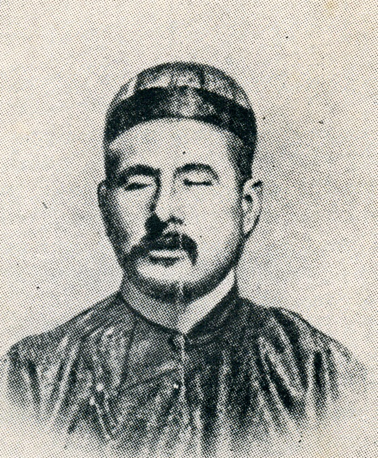
Blind Chang

Blind Chang

Chang Shen was a Manchurian in the late 19th Century who had a notorious reputation within a violent Buddhist sect in China.  He was a womanizer, an alcoholic, a thief, and a gambler.  People who knew him called him so pu wei te, meaning ‘one without a particle of good in him.’  In his cruelty, he turned his own daughter out of his house and forced her into a life of prostitution.  He later drove his wife out of his home.  Seventeen days later, he lost his eyesight.  People who knew him considered his blindness a judgment from the gods for his evil.

In desperation, he traveled, blind, to a missionary hospital over a hundred miles away in Shenyang with the hopes they could help his eyesight.  En route, he was robbed of what possessions and clothing he carried with him.  The missions team, at the time very discouraged from a lack of progress in reaching people, described him as “…destitute and desolate, with scarcely any clothes left upon him, and in the last stages of dysentery.”  They felt a great deal of compassion for him and, since the hospital was full, one of the missionaries gave up his own bed for him.

Attending chapel, ‘Blind’ Chang heard the Gospel for the first time.  Immediately, he understood his own sin and need for a Savior and he joyfully gave his life to Christ on the spot.  A month later, his bodily health restored but his eyesight still gone, he desired to return to his village and asked the missionaries to baptize him before he left.  This request the missionaries denied, telling him, “We will visit you in your village in a few months.  If you are still living a consistent life for Christ, we will baptize you then.”  This disappointed Blind Chang, but he agreed.  His excitement for his newfound faith was evident.  He said, “None of my people have ever heard even the name of Jesus, or of His offer of the gift of eternal life; and do you think that I can keep that to myself any longer?”

Traveling home, he spoke of his new Savior to everyone he came into contact with.  Some listened, others treated him cruelly – encouraging their children to throw rocks at him, or siccing their dogs on him.  As a man without any direct human encouragement, and without eyesight, God stepped in and provided comfort to him directly.  He had dreams of Jesus encouraging him, and stayed true.

His village had a large elm tree where villagers would sit in the shade on hot summer days.  It was there that Blind Chang found a ready audience.  He spoke to whoever was sitting there, sharing the Good News of Jesus with all.  Five months later, in October of 1886, when one of the missionaries came to visit him, the missionary found not only Chang, but a number of other converts – saved by God through the witness of a blind man who knew only the rudimentary Gospel and a single hymn he had been taught at the mission hospital.  The missionary examined the new believers, and the nine people he baptized that day became the nucleus of the village church.  The land around the elm tree was later purchased by the mission for a church and a center of evangelistic work in the region.

That missionary later wrote, “One thing of which I am well assured, is this: Blind Chang, with little knowledge, but with a heart thrilled to the core with the truth which he knew, had in these months done more work and better work for the Kingdom of Heaven than half-a-dozen foreign missionaries could have done in as many years.”  By 1895, Chang had worked his way around to nearby villages, sharing his faith and had personally led over 500 people to Christ – many of them of the worst of society: highway robbers, opium addicts, and prostitutes.

The missionaries told Chang of a school for the blind in Beijing, where he could learn to read God’s Word in Braille.  Amazed that he could do so, Chang immediately set out.  Finding a warm welcome there, he mastered Braille in 3 months.  They wanted him to stay longer, but he insisted on returning to his village to continue his evangelistic work.  He continued his reading, memorizing large portions of the New Testament, much of the Old Testament, and many Psalms.  The sight of a blind man, with the background they all knew well, reading God’s Word with his fingertips, continued to win native Chinese to Christ.

In 1899, the Boxer Rebellion began in China – an uprising against the westernization of China.  Missionaries and Chinese converts were prime targets for violence.  Away from his home in a village, when word of the violence reached him, his friends hid Blind Chang in a mountain cave.

Nearby, fifty believers were rounded up and sentenced to die.  One of the unbelieving residents told the Boxers, “The man you really want is Chang Shen.  If you kill him, you will stop the foreigner’s religion.”  The executioners told the men that if any one of them would lead them to Chang Shen that all would be spared.  All refused.  Word of this reached Chang Shen and he insisted on being taken to die in their place.  His companion reported that there was an eagerness in him as he traveled to save his friends.

On July 19th, 1900, he was arrested and bound.  He was taken to the Buddhist Temple and instructed to offer incense.  Chang refused.  He was treated roughly and he still refused.  Three days later, he was beheaded and his body burned.  After his body burned the Boxers fled in terror saying, “We have killed a good man!”

After the Boxer Rebellion was over, the government of Manchuria ordered a stone monument to be erected in honor of Blind Chang.

e-mail from Christian History, 22 July 2021

https://articles.asiaharvest.org/china-resources/liaoning/1900-blind-chang

https://www.persecutionblog.com/2010/07/he-was-blind-but-now-he-sees.html


Saturday, January 27, 2024

Jonathan Edwards - Sinners in the Hands of an Angry God

The first Great Awakening was a tremendous movement of God within the American colonies from about 1720 through about 1740.  Many of the colonies had been settled by those seeking religious freedom at great cost.  A century later, emphases had shifted from godly living to wealth and prosperity.  Visiting preachers were shocked at the deadness and lethargy of the churches.

A number of things were used by God to awaken the church.  Evangelist George Whitfield came from England to America numerous times – making seven tours of the colonies and preaching over 18,000 sermons.  Hardly a soul in the American colonies was not familiar with Rev. Whitfield.  The intellectual underpinning of the first Great Awakening was pastor Jonathan Edwards.

Jonathan Edwards has been called the last great Puritan.  He has also been called America’s first great Philosopher.  The only son out of twelve children, Jonathan was both the son and grandson of preachers.  He was sent to Yale College at age 13, and graduated at age 17.  After teaching in New York for a couple of years, Jonathan became the assistant pastor to his grandfather in Northampton, MA, and became the pastor after his grandfather’s death.  Edwards was deeply disturbed by the spiritual lethargy of his church.  He began preaching on justification by faith and, coupled with the enthusiasm of the Great Awakening, saw many conversions among existing church members as well as from the community around them. 

The Great Awakening showed a great deal of unity among the church, among Presbyterians, Congregationalists, Episcopalians, Baptists, Methodists, independents.  The population of people attending church in the American colonies more than doubled in that time, and spiritual fervor was greatly increased.  However, there was an old guard, resistant of the movement and suspicious of the emotional excesses the movement displayed.  Edwards was a fierce advocate of the Awakening, preaching sermons and prolifically writing defending the movement.  His book ‘Religious Affections’ was an examination, in great detail, of how to tell whether a spiritual movement was indeed of God.

Out of this environment, he wrote the sermon most identified with the Great Awakening, ‘Sinners in the Hands of an Angry God.’  This is a lengthy sermon beginning the text from Deuteronomy 32:35, “In due time their foot will slip.”  It’s a hard-hitting sermon filled with ominous overtones and vivid imagery for the unconverted.  He delivered the sermon dryly and in monotone, his nearsightedness compelling him to hold the manuscript close to his face.

“All you that never passed under a great change of heart by the mighty power of the Spirit of God upon your souls; all that were never born again, and made new creatures, and raised from being dead in sin...you are thus in the hands of an angry God; ’tis nothing but his mere pleasure that keeps you from being this moment swallowed up in everlasting destruction...The wicked are now walking over the pit of hell on a rotten covering…”

“The God that holds you over the pit of hell, much as one holds a spider, or some loathsome insect, over the fire, abhors you, and is dreadfully provoked; his wrath towards you burns like fire; he looks upon you as worthy of nothing else, but to be cast into the fire; he is of purer eyes than to bear to have you in his sight; you are ten thousand times so abominable in his eyes as the most hateful venomous serpent is in ours. You have offended him infinitely more than ever a stubborn rebel did his prince: and yet 'tis nothing but his hand that holds you from falling into the fire every moment; 'tis to be ascribed to nothing else, that you did not go to hell the last night; that you was suffered to awake again in this world, after you closed your eyes to sleep: and there is no other reason to be given why you have not dropped into hell since you arose in the morning, but that God's hand has held you up…”

Edwards’ sermon sparked a tremendous emotional response.  Some wept openly and loudly, often compelling Edwards to stop and ask them to quiet down so he could continue.  Others gripped the back of the pews in an attempt to keep from sliding into Hell.  Still others fainted.  The sermon was used by God to convert great numbers of people, making them see their own spiritual need.

Jonathan Edwards wrote many things: books, pamphlets, essays.  He could write an essay on spiders (literally) and switch from that to a detailed treatise on the freedom of the will.  His books made him the best-known American scholar in Europe.

In his later years, Edwards was expelled from his congregation.  The ‘old guard’ rebelled against him when he insisted on individuals having a small examination to determine their conversion before partaking in Communion.  He served as a missionary to Native Americans for a couple of years before he was offered the presidency of the College of New Jersey (later Princeton University).  He died a few months later from complications after a smallpox inoculation.

Jonathan Edwards spoke from powerful convictions – convictions that the Christian faith was not something to be merely studied intellectually, but something that should make changes in a person’s behavior and their everyday life.  He understood that the beginning of conversion was a complete understanding of one’s own depravity and complete and total dependence upon God.


http://edwards.yale.edu/archive?path=aHR0cDovL2Vkd2FyZHMueWFsZS5lZHUvY2dpLWJpbi9uZXdwaGlsby9nZXRvYmplY3QucGw/Yy4yMTo0Ny53amVv

https://www.christianity.com/church/church-history/timeline/1701-1800/the-great-awakening-11630212.html


Saturday, January 13, 2024

Mary Webb


Mary Webb

Born in 1779 in Boston, Mary Webb contracted a disease at age 5 which paralyzed her from the waist down – confining her to a wheel chair for the rest of her life.  At age 13, her father died and her mother provided by running a school from their home.  Despite her condition, she was the focus of attention and became ‘the life of the party’ wherever she was.

Seeing the family’s need, a neighbor, pastor Thomas Baldwin of Second Baptist Church in Boston, ministered to the family.  Mary started attending church and began studying the Bible.  She made a profession of faith and was baptized at age 19. 

The following year, she was deeply moved after hearing a visiting preacher speak from the text of 1 Chronicles 15:7, “Be ye strong, therefore, and let not your hands be weak: for your work shall be rewarded.”  She spoke to her pastor about supporting missionaries and he encouraged her in this work.  A year later, at age 21, in a day when women did not form formal groups like this, she founded the Boston Female Society for Missionary Purposes with a small group of 13 women.  She served as the Secretary and Treasurer of this group for the next 56 years – a group which was the forerunner of the Southern Baptist Convention’s Women’s Missionary Union.

An able organizer, she coordinated the efforts of Baptist and Congregational churches across the country.  Unable to travel, she became a prolific letter-writer, writing literally thousands of letters pleading for support, advising like-minded groups that sprung up after her example, and encouraging cooperation among churches, denominations, and individuals in the effort of missions.  Following her example, over 200 other missionary societies around the young United States sprung up – most of which she had a hand in helping get started.

In 1803 she established the Female Cent Society, with the goal of each member donating a penny per week for missions, and an additional two dollars per year.  This money went to the support of missionaries in the field, both internationally and at home, and toward the translation and publication of Bibles.  In 1811, she established the like-minded Children’s Cent Society.

Second Baptist Church started a Sunday School in 1816.  She served many years as its superintendent.

In addition to this work, she was involved in efforts to raise money to educate young ministers, provide clothing for needy children, provide a day care for working mothers, start a Sunday School for impoverished children, and even got involved in work to rescue and rehabilitate prostitutes from the street.

Mary died in 1861 of breast cancer.  She was 82 years old.  Buried in Woodlawn Cemetery in Everett, Massachusetts, there is a marker next to her grave placed there in 1988 by the Southern Baptist Convention Women’s Missionary Union and the American Baptist Women.

https://www.christianity.com/church/church-history/timeline/1701-1800/mary-webb-organized-missions-from-wheelchair-11630334.html

https://thealabamabaptist.org/heroes-of-the-faith-mary-webb-pioneer-for-female-missionaries/


Saturday, November 4, 2023

Luther Bridgers "Sweetest Name"

Luther Bridgers was born in North Carolina in 1884.  His father was a traveling evangelist and often brought Luther with him to revival meetings.  Born into a strong faith, which became his own faith, Luther began preaching at age 17.  He attended Asbury College in Kentucky, and developed his own reputation as a pastor/evangelist/church planter.  He married a godly woman named Sarah, the couple moved to Georgia, and Sarah bore him three sons.

By age 26, the Bridgers family was prospering.  Invitations to conduct revival meetings were plentiful, and when an invitation came to conduct two weeks of services near Lexington, Kentucky, where they both had grown up.  They made plans to travel as a family, with the intent of Sarah and the boys staying with her parents while Luther ministered.

The first week of the revival was very fruitful.  Christians were encouraged and people were saved.  In the middle of the second week, Luther was awakened in the middle of the night by a policeman at the door.  Hat in hand, and trying to control his emotions, the policeman informed him that Sarah and their sons had perished in a devastating fire earlier that evening.

Luther was understandably devastated at the news.  He felt he could not go on preaching, and in the following months was even depressed to the point of considering suicide. 

As he worked through his grief over a period of months, God brought a Bible verse to his mind.  Psalm 77:6, “I will remember my song in the night…”.  As he pondered this verse, words and melody flowed from him, in a song he called “Sweetest Name”:


There’s within my heart a melody.  Jesus whispers sweet and low.

“Fear not, I am with thee; peace, be still.”  In all of life’s ebb and flow.


Jesus, Jesus, Jesus, Sweetest name I know,

Fills my every longing, Keeps me singing as I go.


Al my life was wrecked by sin and strife; Discord filled my heart with pain.

Jesus swept across the broken strings, Stirred the slumb’ring chords again.


(When people asked him later how he could go on, he answered with this verse)

Feasting on the riches of His grace, Resting ‘neath His sheltering wings.

Always looking on His smiling face, That is why I shout and sing.


Tho’ sometimes He leads thru waters deep, Trials fall across my way.

Tho’ sometimes the path seems rough and steep, See his footprints all the way.


Soon He’s coming back to welcome me.  Far beyond the starry sky.

I shall wing my flight to worlds unknown; I shall reign with Him on high.


Jesus, Jesus, Jesus, Sweetest name I know,

Fills my every longing, Keeps me singing as I go.


Luther Bridgers remarried and spent his remaining 38 years of life in ministry: evangelism, missions, and pastorate.  He died in Atlanta in 1948.


Morgan, Robert J., Then Sings My Soul, Nelson Publishers, 2003.

https://enjoyingthejourney.org/hymn-history-he-keeps-me-singing/