Saturday, May 14, 2022

Adoniram Judson, America's first foreign missionary

Adoniram Judson, America’s first foreign missionary

Adoniram Judson Jr. was born to a Congregational minister in Massachusetts in 1788.  As a young man, while in attendance at Brown University, he met a friend named Jacob Eames who introduced him to the writings of the new atheistic French philosophies.  Breaking his parents’ hearts, he abandoned the faith he was raised with and embraced his newfound atheism.  He made his home in New York where he taught at a school and wrote math and grammar textbooks for girls’ schools.

Eventually tiring of New York, he decided to set off for the West.  While traveling he came, utterly exhausted, late one evening to an inn.  Inquiring about a room, Adoniram was told there were none available.  When he pressed the innkeeper, he was told that they could make room if he was willing to share a room with a man who was deathly ill.  He readily agreed and the innkeeper hung a sheet to allow for some privacy for both parties.  Tired as he was, Adoniram was kept up most of the night by the wails of the sick man and the constant rushing footsteps of his caregivers.  It was only early in the morning that Judson dropped to sleep, in sheer exhaustion.

While settling his debt with the innkeeper the next morning, Adoniram inquired about his roommate.  The innkeeper replied that the man had sadly died during the night.  Judson asked his name and received the reply, “Jacob Eames.”  Hearing the name of his former friend, the man who had led him away from his faith, shook Adoniram to the core.  If his friend, who supposedly had all the answers, had died so miserably, what hope was there for him?  Judson returned to his faith, enrolled in Andover Theological Seminary, and decided on a missionary career.

In 1812, two weeks after marriage to Ann Hasseltine, Judson was commissioned by the Congregational Church and set off for India, hoping to parallel the missions work of William Carey among the natives there.  While en route, though, he did a study on baptism and came to the conclusion that his denomination’s views on baptism were incorrect.  He came to the conclusion that a part of the Great Commission (Matthew 28:19-20) included believer’s baptism (as opposed to the infant baptism of the Congregationalists).  When he arrived in Calcutta, both he and Ann were baptized by immersion.

This new belief would certainly cause an issue with his sending denomination.  The ship, returning to the United States, carried two letters from Judson.  The first was a letter to the Congregational sending board, resigning his position.  The second was a letter to the newly-formed American Baptist association, informing them he was available for support.  His letter was the impetus for American Baptists to form their own missions organization and they replied in the affirmative.

Political upheaval caused by the war of 1812 resulted in the Judsons’ being forced out of India.  In July of 1813 they moved to Burma, and Ann miscarried her first child en route on board the ship.  Judson knew Greek, Hebrew, and Latin, in addition to English, but spent a full three years, twelve hours a day, learning the Burmese language before he was comfortable preaching to the people – time they spent with minimal contact with the outside world.  During this time, their second child also died at eight months of age.

Judson’s goal was “to preach the Gospel, not anti-Buddhism.”  By 1819, five years after arrival, Adoniram had his first convert.  By 1823 there were 18 believers – after a full ten years of missions labor.  He had completed by this time a Burmese Grammar and had begun to translate the Bible into Burmese.  Adoniram requested and was eventually sent a printing press, with which he printed copies of the Gospel of Matthew and Christian tracts.  Ann had picked up the language as well as her husband, perhaps better, and had developed loving friendships with many of the local women.

There was a race of people in Burma called the Karen.  They were animistic peasants and were considered to be an inferior people by other Burmese.  It was said, “You can teach a buffalo, but not a Karen.”  Adoniram took a young Karen with a criminal record under his wing and, after nearly a year of teaching and gentle instruction, this young man named Ko Tha Byu came to faith.  As Adoniram preached in different areas, Ko Tha Byu would speak to the peasant Karen.  As a result of the young man’s preaching, entire families and villages of Karen came to faith, and they later became a dynamic source of missionaries reaching other Burmese.  The number of Karen Christians today number in the hundreds of thousands.

The British went to war with the Burmese in 1826.  As a Westerner, Adoniram was imprisoned with other Western men in brutal conditions.  Often not fed, constantly shackled in irons, and sometimes suspended by his feet in chains with only his head and shoulders touching the ground, he suffered miserably for 21 months.  Ann was the model of supreme courage during this time.  As a Western woman, alone in a country at war with the West, she gave birth to her third child and went from official to official pleading for her husband’s release, and visiting him when she was able.  Unfortunately, soon after his release, Ann died from her exertions, and their child died six months later.  Several months later, the Burmese government compelled him to serve as translator for them with the victorious British to negotiate terms of their defeat.

For a year after Ann’s death, Adoniram suffered from a crippling depression.  Fellow missionaries, George and Sarah Boardman, lifted his spirits and he continued and eventually completed his translation work of the Bible into Burmese – a translation still in use today.  He first published it in 1835, after 24 years of work.

That same year, 1835, Adoniram married Sarah Boardman, who had become widowed.  They had eight children, five of whom survived to adulthood.  In 1845, Sarah took ill and doctors prescribed rest and a trip home.  She died in route.

Upon his return to America, Adoniram Judson was unexpectedly treated as a celebrity.  He toured the Eastern United States, speaking and raising money for foreign missions.  His own illness kept him from speaking loudly, so he needed an “Aaron” to speak for him.  He found he had difficulty conversing in English, since so much of his life was invested in the Burmese language.

While in the United States, he married for the third time, to a poet named Emily Chubbuck, 29 years his junior.  They returned to the mission field in 1846, where Adoniram died in 1861. 

Judson’s legacy is multi-faceted.  His impetus led to the creation of the American Baptist Missionary Society, the predecessor of our own Southern Baptist International Missions Board (IMB).  He published the first Burmese Bible, which remains the most widely read Bible in that language today.  Ann wrote many letters about missions life which inspired many generations of women to go into missions themselves.
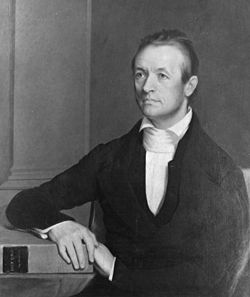


https://en.wikipedia.org/wiki/Adoniram_Judson

https://en.wikipedia.org/wiki/Emily_Chubbuck

Bailey, Faith, Adoniram Judson, Moody Press, 1955.

McGavran, Donald A., The Bridges of God, in Perspectives on the World Christian Movement, A Reader, 2009.

Saturday, April 9, 2022

Hossein Soodmand, Martyr for Christ


Hossein Soodmand – Iranian martyr for Christ

Hossein Soodmand was born in Iran to a devout Muslim family and, while growing up, was taught to hate Christians.  When he was seven years old, he was taunting and throwing stones trying to break the water pitcher of a Christian woman in his village.  When the pitcher broke, he turned to run but tripped and fell, cutting open his knee.  When he saw the woman coming toward him, he feared a beating but was shocked when she cleaned and bandaged his wound and gave him a sweet treat.  His daughter later recalled that he never forgot her “unusual display of mercy and grace.”

As a young man, he was drafted into military service.  He took very ill and was transported to a hospital where an Armenian Christian cared for him, giving him a small cross and praying for him.  Hossein fell asleep and had an intense dream in which he remembered Jesus giving him something to eat.  When Hossein woke up, he was completely healed.

After leaving army service, he moved to the town of Ahvaz, where he sought out a group of Christians and came to faith – determined to serve the Savior who had healed him.  Christianity was not yet illegal, though certainly frowned upon, as this was before the 1979 Islamic Revolution when the Shah was deposed and the Ayatollah Khomeini rose to power.  He was, as with many Muslim converts, ostracized by his family for his newfound faith.  He spent some time doing Christian work in a school for the blind, and met his wife Mahtab there, one of the students of the school.  They had four children together and he pastored his children as lovingly as he pastored his flock.

By the time of the Islamic Revolution, Hossein had become a pastor under the Assembly of God denomination and had moved back to his hometown of Mashhad where he had established a growing church in the basement of his house. 

Hossein’s daughter, Rashin, later remembered that, when she was eleven years old, her father was arrested for the first time.  He spent a month in prison and was released with the threat of execution if he didn’t renounce his faith.  The authorities in his church offered him the opportunity to escape the country and he replied, “I am a follower of the great Shepherd of the sheep, our Lord Jesus Christ, and I am ready to sacrifice my soul for my sheep.  For me to escape from this persecution would cause the hearts of my flock to become cold and weak.   And I never want to be a bad example for them.  So, I am ready to go to prison again and, if necessary, to give my life.” 

His house church continued until his re-arrest in 1990.  He was placed into solitary confinement and later hanged for the crime of apostasy on December 3rd of that year – the trial and execution were something his family didn’t find out about until after the fact.  Hossein was buried in an unmarked grave in the area of the cemetery reserved for the accursed.  Having the opportunity to visit his grave 29 years later in 2019, the family found the area had been bulldozed as part of a planned expansion of the cemetery.  Nobody would tell them if his body had been exhumed.

Hossein’s son Ramtin became a pastor and Iranian Evangelical leader in his father’s stead before he was arrested in 2008 for the crime of apostasy.  A huge international outcry and the intervention of Amnesty International secured his release and safety for his family. 

His daughter Rashin currently lives in London, England, and continues the evangelistic work of her father and speaks publicly about the persecution of Christians in Iran.  She has a fantastic interview on YouTube on the Voice of the Martyrs page.

Pastor Hossein Soodmand remains the last person formally executed under Iran’s anti-apostasy laws.  A number of people remain under a death sentence in Iran, including a few directly tied to Pastor Soodmand, but Iran has become very sensitive to international pressure following Hossein’s death.  His martyrdom in one of the most hostile areas in the world to the Gospel remains a source of inspiration and comfort to Iranian Christians worldwide.


https://www.youtube.com/watch?v=BJfu5BJJe5U

https://www.youtube.com/watch?v=K_zjbwbmhE4

https://www.christianpost.com/news/iran-bulldozes-over-grave-of-pastor-executed-for-converting-to-christianity-after-seeing-jesus-in-dream.html

https://www.christiantoday.com/article/iranian.authorities.release.son.of.hanged.pastor/21739.htm

https://www.executedtoday.com/tag/ramtin-soodmand/


Saturday, March 19, 2022

Thomas Dorsey, the Father of Gospel Music

Thomas Dorsey

Thomas Dorsey was an African-American born in 1899 near Atlanta, Georgia – one of ten children.  His father was a well-respected itinerant preacher and his mother was the organist in their church, a skill she cheerfully taught her son.  As a young man, he left home to go to Chicago and study music – music that paid, that of jazz and the blues.  Despite his mother’s pleadings to not pursue “the Devil’s music” he became fairly successful in the 1920s, playing in clubs under the name “Georgia Tom” Dorsey. 

Tom’s mother’s prayers, however, continued to follow him and he found himself torn between the secular and the spiritual.  A couple periods of depression which he later called “God interruptions,” during which he even contemplated suicide, led him back to church where the pastor told him, “Dorsey, the Lord has too much work for you to do to let you die.”

His pastor’s admonition led him to write gospel music – Christian music with a blues vibe.  Music of this style was initially slow to catch on, and Tom found himself having to rely on his secular music composition for a while until 1930 when he was hired by Pilgrim Baptist Church in Chicago to organize one of the first gospel choirs.  This style of music then quickly caught on, especially among black churches in America, and led to his becoming known as the “Father of Gospel Music.”  During this time, he mentored and trained many noted musicians, including Mahalia Jackson who he later toured with.  From this position, he also founded the first publishing house dedicated to publishing music by African-American composers.

He was not too far along in this position when, while in Indianapolis organizing a choir, he received a telegram informing him that his wife had died in childbirth.  He rushed home to find out that his newborn son had died as well.  Turning to his piano, he felt what he later described as a “mystical experience.”  He later recounted, “As my fingers began to manipulate over the keys, words began to fall in place on the melody like drops of water falling from the crevice of the rock.”

                Precious Lord, take my hand, Lead me on, help me stand;
                I am tired, I am weak, I am worn;
                Thru the storm, thru the night, Lead me on to the light,
                Take my hand, precious Lord, lead me home.


                When my way grows drear, Precious Lord, linger near;
                When my life is almost gone,
                Hear my cry, hear my call, Hold my hand lest I fall;
                Take my hand, precious Lord, lead me home.

“Precious Lord” was said to be Rev Martin Luther King Jr’s favorite hymn.  Shortly before his murder, his last words were to his music leader, “Ben, be sure to play ‘Take My Hand Precious Lord’ at the meeting tonight.  Play it real pretty.”  Dorsey’s protégé, Mahalia Jackson, sang it at his funeral.

Thomas Dorsey wrote nearly a thousand gospel songs over the course of his life, including “Peace in the Valley.”  He passed away into the arms of His Lord in 1993, after a nearly two-decade struggle with Alzheimers.


Morgan, Robert J., Then Sings My Soul, Thomas Nelson Publishers, 2003.

https://www.inspirationalchristians.org/influencers/thomas-dorsey-biography/

https://blackamericaweb.com/2019/07/01/little-known-black-history-fact-thomas-dorsey/

https://en.wikipedia.org/wiki/Thomas_A._Dorsey


Saturday, February 5, 2022

Titus Coan, Missionary to Hawaii

Titus Coan, missionary to the Hawaiian islands

Born in Connecticut in 1801, Titus Coan was converted as a young man while hearing the revival preaching of Charles G. Finney during the Second Great Awakening.  He worked directly with many of the great preachers of that day, then answered the call to enter the ministry himself.

Titus graduated from seminary in 1833.  The following year, he and his new wife sailed for the Hawaiian Islands and made his home on Hilo Island.  After spending two years learning the language, he took an extensive tour of the island with the goal of meeting every single one of the 16,000 natives who lived there, a goal he was successful in meeting.  As he met the people, he kept a detailed notebook on every person so he could remember details of their life.  The purpose of this was twofold: 1.) he wanted to be able to pray effectively and directly for each person; and 2.) he wanted to be able to effectively follow up in subsequent visits.  In future visits, he updated the notebook with more current information.

In 1837 and 1838, thousands of natives from Hilo and from the surrounding islands flocked to Hilo to hear the preaching of Reverend Coan.  For church membership, Titus required evidence of conversion, a Christian life lived consistently and effectively over a period of several months.  Over the next few years, the church on Hilo grew to over 13,000 members – in an island population of 16,000.  This was literally the largest church in the world at the time.  Titus wrote, “In places where I spent my nights they filled the house to its entire capacity, leaving scores outside who could not enter.” 

The classic signs of revival were evident everywhere.  Wherever Titus went, men and women fell under conviction and cried out for mercy.  They studied the Word of God late into the night and arose early to continue to read.  People confessed sins to each other and relationships were restored.  Prayer services lasted for hours.

The native population in the surrounding islands also experienced revival.  Over 56,000 members were added to the rolls in churches in surrounding islands.  By 1870, the mission board that sent Titus terminated the mission to Hawaii, concluding that the islands were “Christianized.”  Coan advocated for a Hawaiian Missionary Society – where natives were trained and sent to other Pacific island nations. 

Coan wrote that he hoped to “die in the field with armor on, with weapons bright.”  This happened.  In the middle of a revival service in 1882 he suffered a stroke.  He lingered for a few weeks before he died, having seen 70% of the population of Hilo put their trust in Jesus.

Titus Coan’s gravestone on Hilo reads:

Titus Coan
February 1st, 1801
December 1st, 1882
He Lived by Faith
He Still Lives
Believest Thou This?
John 11:26


http://hilohawaii.me/titus-coan-hilo-missionary

https://www.christianity.com/church/church-history/timeline/1801-1900/titus-coan-early-missionary-to-hawaii-11630604.html

https://www.bu.edu/missiology/missionary-biography/c-d/coan-titus-1801-1882/


Saturday, December 18, 2021

Francis of Assisi - the first living Nativity

Francis of Assisi

Francis of Assisi was a humble man, living in the early 13th century, who turned the Christian world on its head.  He was born in 1182, the son of a very wealthy Italian merchant in the city of Assisi.  As a young man, his life was that of a spoiled, rich young man – living very much in the world.  One early biographer said that he “outshone all his friends in trivialities.” 

As a 20-year old young man, he willingly went to war, with high hopes of military glory.  However, during his first battle, he was taken prisoner and it took a full year before his father could arrange to pay the ransom required for his release.  He became ill during his imprisonment, so when he was ransomed, he returned to his home to recuperate.  His year of convalescence was spiritually transformative.  He seems to have become delirious, and experienced wild dreams and visions – events he tried to deal with by retreating to a broken-down old church on the edge of town to pray.  One day, during his prayers, he recounted a vision of Jesus telling him three times, “Francis, go repair my house, which is falling into ruin.”  Francis initially understood the vision to be God’s direction to repair the specific church building he was praying in, so he began selling off his family’s wealth to raise money for repairs.

When Francis’ father found out about this, he was furious and dragged his son to the bishop to demand repayment.  Instead, Francis took off his clothes in front of those gathered, neatly folded them, and laid them in front of his father.  He then committed his life to one of solitude and spiritual reflection. 

His solitude and study of Scripture inspired him to live the life of an itinerant preacher, a life with minimal possessions and utter simplicity.  His preaching was forceful, with very strong exhortations to repent.  His personal life reflected his own abhorrence of sin: sometimes taking extreme measures of bodily self-denial to purge himself of every last ounce of temptation.

By the time he was 27 years old, he had gathered a small group of like-minded men devoted to preaching and poverty.  This small group became the nucleus of the Franciscan order of the church.  The rapidly-growing group preached the message of repentance, simplicity, and radical obedience to Jesus,  making evangelistic trips all over the known world.  It was said of Francis by his peers that he lived the life detailed in the Sermon on the Mount better than any other human being ever…with the exception of the One who preached the sermon itself.  His Franciscans took great pains to emulate their superior, as he sought to emulate Christ. 

Toward the end of his life, Francis headquartered his ministry at a rough retreat on a hillside in Italy – a place provided for him by a wealthy admirer and friend named Giovanni da Vellita.  It was picturesque, with a view of the valley below with mountains in the distance.  Surrounding him were woods, and behind the retreat were a number of caves.  In this solitude, Francis found his place for spiritual meditation as well as taking care of the numerous administrative details of his Order.

On Christmas Eve, in the year 1223, Francis, nearing the end of his 44-year life, invited fellow hermits and peasant villagers in his area to a Christmas Eve mass.  That evening, as the people made their way up the steep mountainside, the torches they carried must have made a beautiful sight.  As they climbed, they sang Christmas hymns.  When the people reached the top, they were treated to a surprise from Francis.  He had arranged with Giovanni to provide an ox and a donkey in one of the caves, along with a manger and a man and a woman, dressed to represent Mary and Joseph.  In the manger sat a wax doll to represent the infant Jesus.

As everyone gathered around, Francis preached a simple Christmas sermon in that setting.  He promised his listeners changed lives if they placed their faith in Christ.  After the mass was over, Francis and Giovanni spend the night in a prayer vigil over the manger and wax Christ child.

This “living manger” scene had never been done before.  Francis was actually nervous about doing so – even writing the Pope himself asking permission lest he be thought of as taking the birth of Christ too frivolously.  What a scene that must have been that first time – and how many times has that scene been repeated since?

https://www.christianitytoday.com/history/people/moversandshakers/francis-of-assisi.html

Periodical e-mail from Christian History, 24 December 2020.


Saturday, November 27, 2021

Saturninus

Saint Saturninus

Saturninus is a guy about whom we really wish we had more background information.  While a couple of sources place him in the first century of the church – a contemporary and friend of the Apostles, more reliable sources place him in the third century.  Many fanciful stories were written in later years about him – here is what we know for certain:

After a number of Roman persecutions had decimated the Christian communities in the Western part of the Roman Empire, Pope Fabian sent a number of missionaries to various parts of Gaul (France) to re-evangelize that part of the world.  One of these missionaries, named Saturninus, was sent to the city of Toulouse.  He spent a dozen years in that city, and his ministry bore much fruit in the conversion of souls and training of church leaders.  Saturninus, while walking from his residence to his church, had to pass by the capitol – also the chief temple in the city.

It was said that when Saturninus passed by the temple, that the gods would go silent.  It is also very likely that converts to Christianity ceased patronizing the temple and the priests wanted to put a stop to a further drain on their follower base. 

On November 29th, 257 AD, temple leaders bound Saturninus and drug him into the temple.  In an effort to appease their gods, they insisted Saturninus sacrifice a bull to their gods.  History records Saturninus’ reply: “I adore only one God and to Him I am ready to offer a sacrifice of praise.  Your gods are devils and are more delighted with the sacrifice of your souls that with those of your bulls.  How can I fear them [gods] whom you acknowledge, tremble before a Christian?”

Enraged, Saturninus was condemned to be dragged by the bull through the town until the rope broke.  They tied his feet to a rope and the bull was let loose.  He was violently dragged through the streets, killing him.  When the rope broke, what was left of his body was rescued by two faithful Christian women and hidden away.  A century later, when the practice of Christianity was no longer forbidden, the bishop of Toulouse erected a small church on the site where the rope broke as a place to house the body of Saturninus.  Over the centuries, this building was expanded into a magnificent cathedral.  Roman Catholics celebrate his feast day on the day of his martyrdom: November 29th.


Saturday, October 16, 2021

Clement


Clement I

Clement I of Rome (not to be confused with later Popes Clement or Clement of Alexandria (d ~215 AD), is often understood to be the person named Clement called out in the Biblical book of Philippians. 

Indeed, true comrade, I ask you also to help these women who have shared my struggle in the cause of the gospel, together with Clement also, and the rest of my fellow workers, whose names are in the book of life. – Philippians 4:3

While we see Clement as a faithful member of the church in Philippi in the Scripture, Clement is subsequently named in different lists as either the second or fourth bishop of Rome.  Church tradition holds that he was specifically consecrated by Peter for the role, serving from AD 88 to AD 99.

While a number of writings are attributed to Clement, the only one which can be said with certainty to be from the pen of this church father is a letter to the church in Corinth.  This letter is considered to be the earliest Christian document outside of the New Testament.

Clement’s letter to the church in Corinth indicates that the Corinthians has repented of the divisiveness shown in Paul’s letters to the same churches.  However, they were beginning to fragment again, even worse than when Paul wrote to them, to the point of expelling two of their elders.  It is a long letter (65 chapters containing over 14,000 words) full of Biblical teaching and exhortations to humility and brotherly love.  He writes of the martyrdom of both Peter and Paul as well as others who gave their lives for the faith.  He speaks of church government, and gives specific counsel to reinstate the two elders who had been expelled. 

Chapter 23 begins a great dissertation on the Resurrection of Christ.  He brings the example of the Phoenix (a single bird he attributed to the Arabian area), a bird which was said to live exactly 500 years, then return to Egypt to die by burning itself to death.  Then, from the ashes a worm appeared which grew into the next phoenix.  Apparently, Clement believed the story to be true and used it as a beautiful illustration of the resurrection.

Clement was arrested under the persecution of the Roman Emperor Trajan and set to work in a stone quarry on the Crimean peninsula.  There is a legend about him during this time that they had a severe shortage of water.  Clement prayed for water and, according to the legend, had a vision of a lamb on a hill.  Taking a pickaxe, he walked up to where the lamb was, struck the ground with the pickaxe, and a clear gusher of water flowed to quench the thirst of the prisoners.

Clement was martyred by being tied to an anchor and thrown into the Black Sea. 

https://en.wikipedia.org/wiki/Pope_Clement_I#Epistle_of_Clement

https://www.christian-history.org/clement-of-rome.html

https://www.newadvent.org/fathers/1010.htm